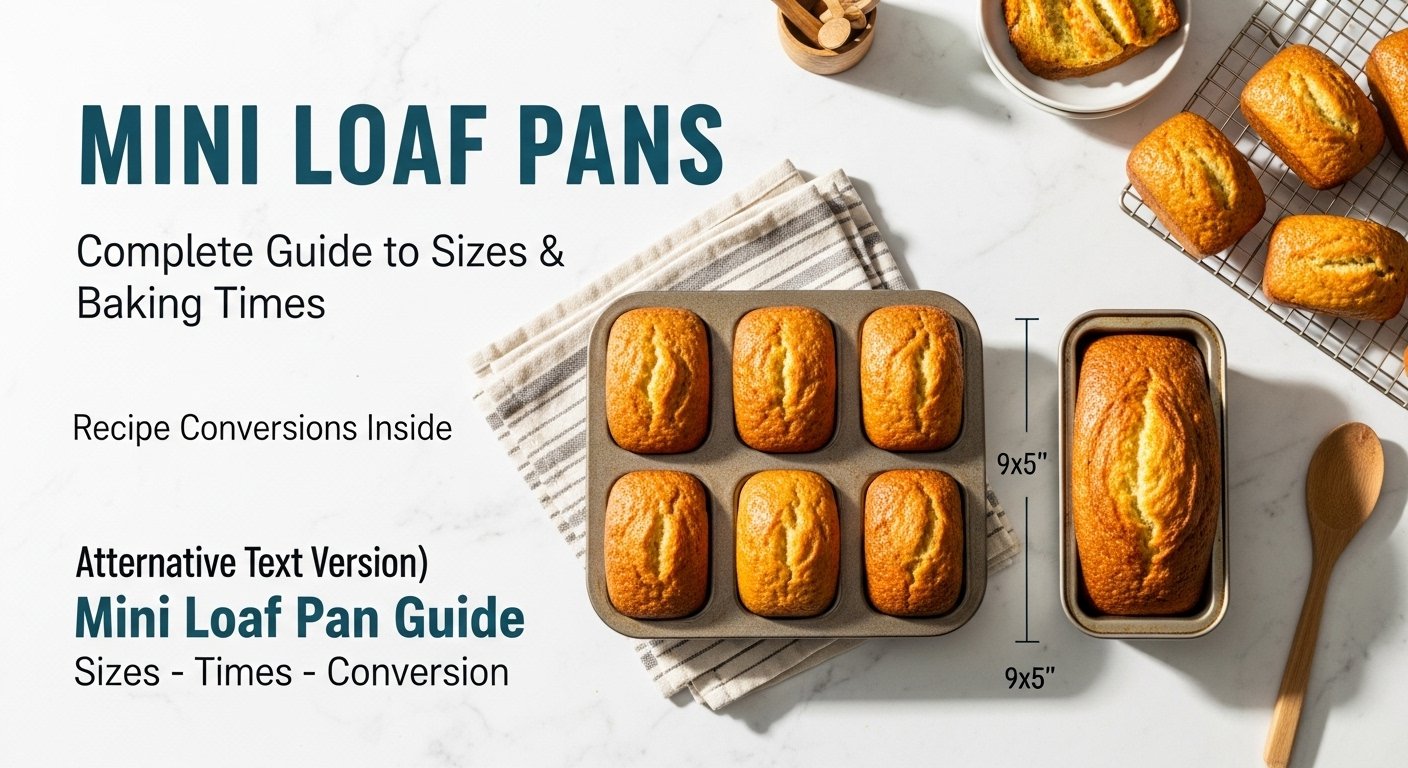
I'll be honest—I was skeptical about mini loaf pans at first. They seemed like just another kitchen gadget I didn't need cluttering my cabinets. But after my sister gave me a set for Christmas three years ago, they've become one of my most-reached-for baking tools. There's something incredibly satisfying about pulling six perfect little loaves out of the oven instead of one big one.
Whether you're new to mini loaf pans or looking to improve your technique, this guide covers everything I've learned through plenty of trial and error. We'll talk about sizing, conversions, timing, and all those little details that make the difference between good results and great ones.
What Is a Mini Loaf Pan?
A mini loaf pan is exactly what it sounds like—a smaller version of your standard loaf pan, designed to bake individual-sized breads, cakes, and even savory dishes. Most come in sets of four, six, or eight connected cavities on a single baking sheet, though you can also find standalone individual pans.
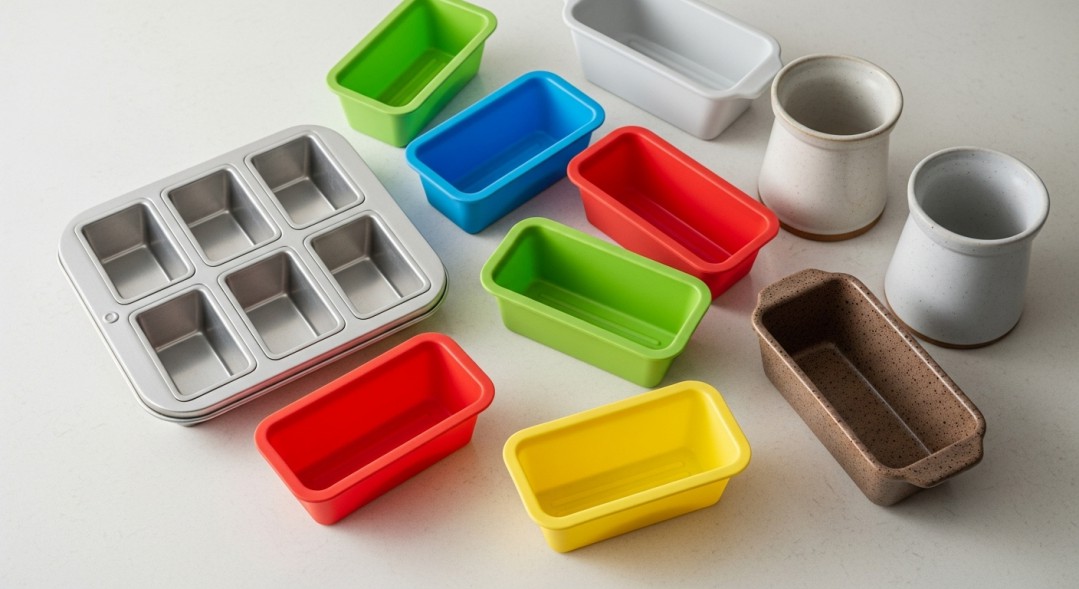
I've used both types extensively. The connected pans are fantastic for efficiency—you can bake multiple loaves at once without juggling separate pans. The standalone versions give you more flexibility in spacing and are easier to store if you're tight on cabinet space.
These pans come in different materials, and I've noticed real differences in how they perform. My aluminum pans heat up quickly and give me nice, evenly browned crusts. The silicone ones are ridiculously easy to pop loaves out of, but they don't brown as well and feel a bit floppy when you're moving them around. I've got one ceramic mini loaf pan that's gorgeous for gift-giving, but it takes longer to heat up.
The beauty of mini loaf pans goes beyond just aesthetics. I love them for portion control—my husband and I can each have our own loaf without the temptation of a full-sized one sitting on the counter. They're also perfect when I want to try multiple flavor variations at once or give freshly baked goodies to neighbors without parting with my favorite full-sized pan.
How Big Is a Mini Loaf Pan?
Here's where things can get a little confusing because not all mini loaf pans are created equal. The most common size I've encountered measures about 5.75 inches long, 3.25 inches wide, and 2.25 inches deep. These typically hold around 2 cups (16 ounces) of batter when filled properly.
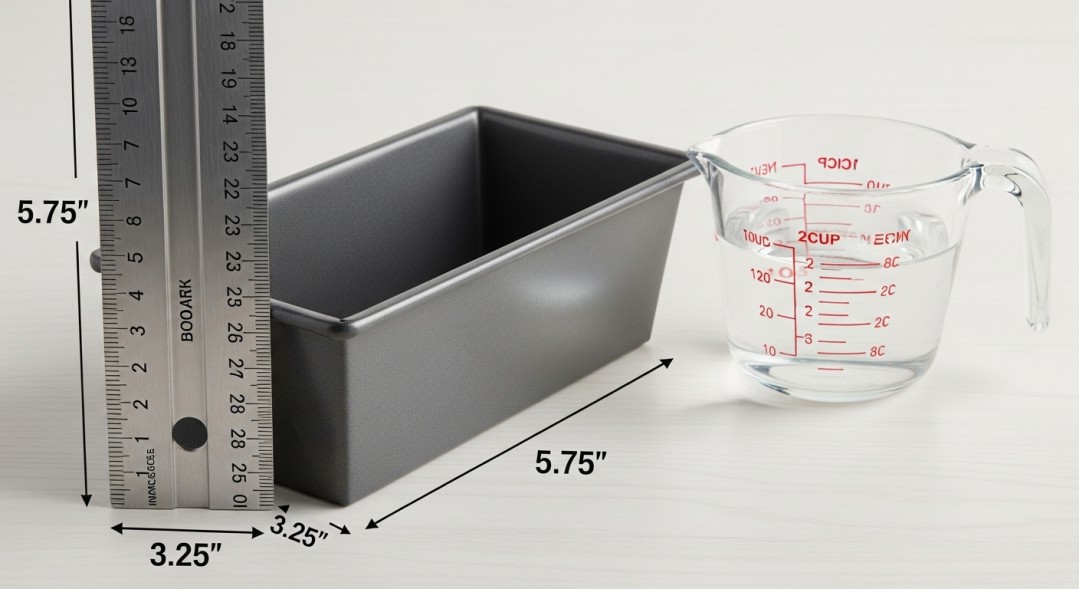
But—and this is important—I've seen quite a bit of variation between brands. I have one set that's slightly smaller at 5.5 inches, and another that's closer to 6 inches. It doesn't sound like much, but that half-inch difference affects capacity and baking time more than you'd think.
When I first started using these pans, I made the mistake of assuming all mini pans were the same size. I followed a recipe calling for "mini loaf pans" and ended up with overflow on one batch and underfilled pans on another. Now I always measure new pans when I get them. Just fill one with water using a measuring cup—it takes thirty seconds and saves you from messy surprises later.
The 2-cup capacity is a good general guideline, but always check your specific pans. Some "mini" pans are actually more like "petite" at 1.5 cups, while others edge closer to 2.5 cups and should really be called "small" loaf pans.
Converting Regular Recipes to Mini Loaves
This is where mini loaf pans really shine—you can adapt almost any loaf recipe you already love. The math is straightforward once you understand the capacity differences.
How Many Mini Loaf Pans Equal a Regular Loaf Pan?
A standard 9x5-inch loaf pan holds about 8 cups of batter. Since most mini loaf pans hold 2 cups each, you'll need about four mini pans to equal one regular loaf pan. Some larger standard pans (like 10x5-inch) hold closer to 9 cups, which would translate to 4-5 mini loaves.
I use this 4-to-1 ratio as my starting point for all conversions. If my banana bread recipe makes one regular loaf, I know it'll fill four mini pans nicely. Easy enough, right?
How Many Mini Loaf Pans for a Recipe?
The number of mini pans you'll need depends entirely on your recipe's yield. I've developed a simple method: look at the pan size the original recipe calls for and do the capacity comparison.
For example, my go-to zucchini bread recipe calls for two 9x5-inch pans. That's 16 cups total, which means I need eight mini loaf pans. If you're working with a recipe that uses volume measurements for the pan (like "two 8-cup loaf pans"), the math becomes even simpler—just divide by 2 cups per mini pan.
Here's a practical tip I wish someone had told me earlier: most recipes feed a crowd and make more than you might want at once. I often scale down my favorite recipes to make just four or six mini loaves. It's less waste, and the smaller batches actually give me better baking results because my oven heats more evenly with fewer pans inside.
When I'm testing a new recipe, I sometimes deliberately make one regular loaf and a few mini ones from the same batch. That way, I can freeze the mini loaves for later while we enjoy the big one fresh. The conversion isn't perfectly precise when you split it like this, but it works surprisingly well.
How Much to Fill Mini Loaf Pans
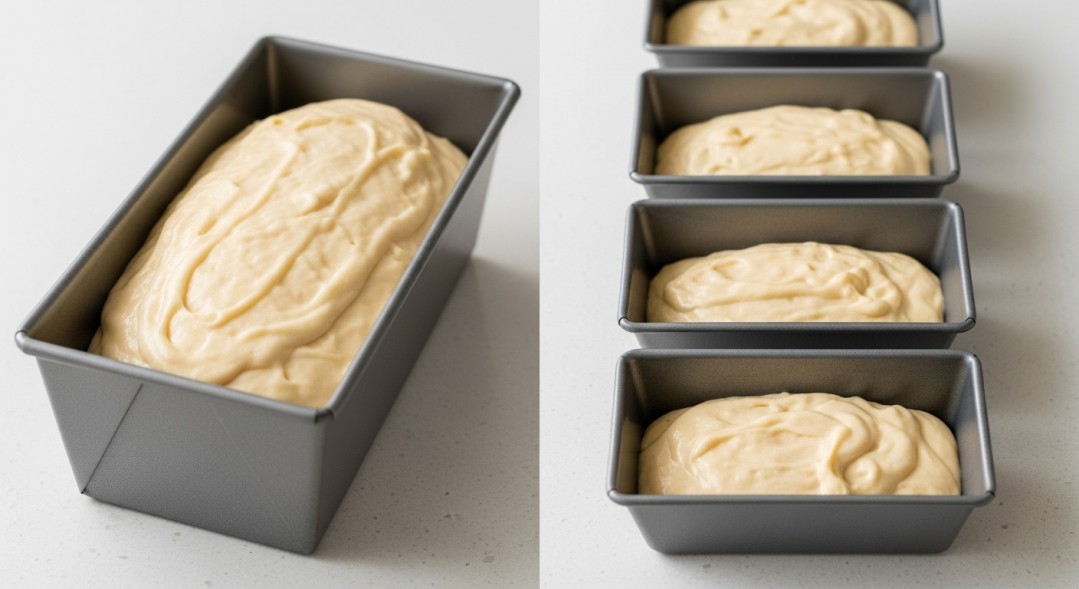
This might seem obvious, but proper filling makes a huge difference in how your loaves turn out. The golden rule I follow: fill mini loaf pans about two-thirds full.
I learned this the hard way. My first attempt at mini pound cakes, I filled the pans nearly to the top thinking I'd get nice, tall loaves. Instead, I got a volcanic overflow situation that left me scraping baked batter off my oven floor. Not my proudest baking moment.
The two-thirds rule works because most batters rise as they bake. Quick breads with baking powder or baking soda expand significantly. Even denser batters like pound cake need room to grow. When you leave that top third empty, your loaves rise into a beautiful dome without spilling over the edges.
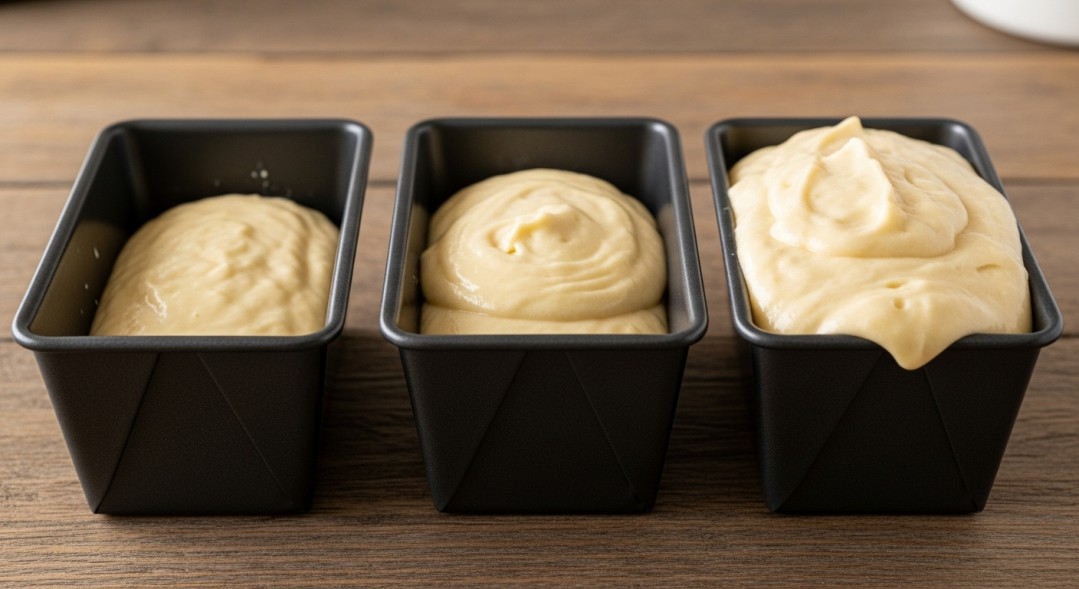
There are some exceptions. When I make meatloaf in mini pans, I fill them almost completely because meat doesn't rise like batter does. For very dense, low-rise breads like some gluten-free recipes, you can get away with filling them slightly higher—maybe three-quarters full.
Here's a measuring trick I use: I scoop batter into each pan using a large ice cream scoop (mine holds about 1/4 cup). For my 2-cup pans, five scoops gives me that perfect two-thirds fill level. It's much faster than measuring each pan individually, and it ensures all my loaves are the same size, so they bake evenly.
Pay attention to batter consistency too. Really thick batters won't spread much, so they can handle being filled slightly higher. Thin, pourable batters need more headroom because they expand more dramatically in the oven.
How Long to Bake in Mini Loaf Pans
Baking time is probably the trickiest part of converting recipes to mini loaf pans. The general rule of thumb: reduce your baking time by about 30-50% compared to a full-sized loaf.
This shorter time makes sense when you think about it. Smaller loaves have less batter in the center, so heat reaches the middle much faster. A regular banana bread that takes 60 minutes in a standard pan usually takes me 25-30 minutes in mini pans.
But here's the thing—that percentage reduction is just a starting point. I've found that baking times vary based on several factors: your oven's accuracy, the material of your pans, how many pans you have in the oven at once, and the specific recipe you're making.
My oven runs a bit hot, so I usually check mini loaves about five minutes earlier than recipes suggest. I've been burned (literally) too many times by assuming my timer was enough. Now I set it for a few minutes before I expect them to be done, then check and add time if needed.
Mini Loaf Pan Baking Times
Through lots of experimentation, here's what I've found works for most recipes:
Quick breads like banana bread, zucchini bread, and pumpkin bread typically take 20-30 minutes at 350°F. My banana bread recipe, which takes an hour in a regular pan, is perfect at 28 minutes in minis.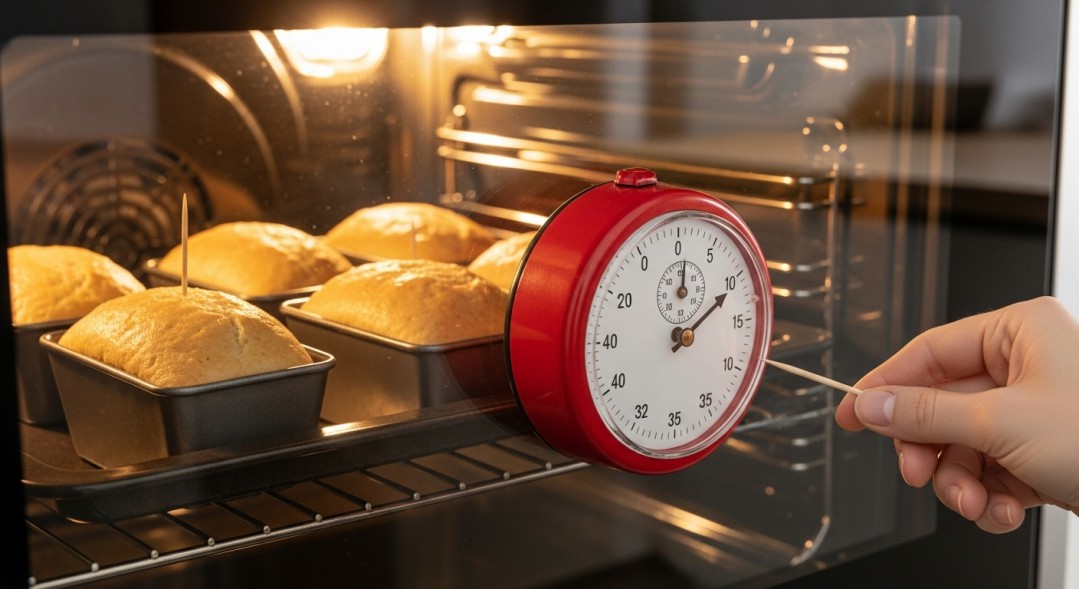
Pound cakes and butter cakes need 25-35 minutes, usually at 325-350°F. These denser batters take a bit longer. I make lemon pound cake mini loaves that need the full 35 minutes to get that perfect golden crust.
Yeast breads are faster—usually 15-25 minutes. I don't make these as often in mini pans, but when I do, I watch them carefully because they can go from perfect to overdone quickly.
Meatloaf takes about 25-30 minutes at 350-375°F. The smaller size is actually perfect for meatloaf because it develops a nice crust all around while staying moist inside.Temperature usually stays the same as the original recipe calls for. I bake at whatever temp the full-sized version uses—the timing changes, but the temperature typically doesn't need adjusting.
The toothpick test is your best friend here. I start checking about five minutes before I think they'll be done. Insert a toothpick or cake tester into the center of one of the middle loaves (they take longest since they're surrounded by other pans). If it comes out clean or with just a few moist crumbs, you're done. If there's wet batter, give them another 3-5 minutes and check again.
I've learned to trust the toothpick more than the timer. Oven temperatures vary, pan materials conduct heat differently, and even humidity can affect baking time. The toothpick doesn't lie.
One more thing about timing: all the loaves in a connected pan don't always finish simultaneously. The ones on the ends or corners sometimes bake faster because they're exposed to more heat. I've started rotating my pans halfway through baking to get more even results.
How to Use Mini Loaf Pans
Getting great results from mini loaf pans isn't just about timing and measurements—proper technique makes a real difference. Here's what I've learned through plenty of practice.
Preparation is everything. I grease my pans thoroughly, even the non-stick ones. My favorite method is using softened butter and a pastry brush to get into all the corners. Then I dust with flour, tapping out the excess. For chocolate recipes, I use cocoa powder instead of flour so I don't get white streaks on the loaves.
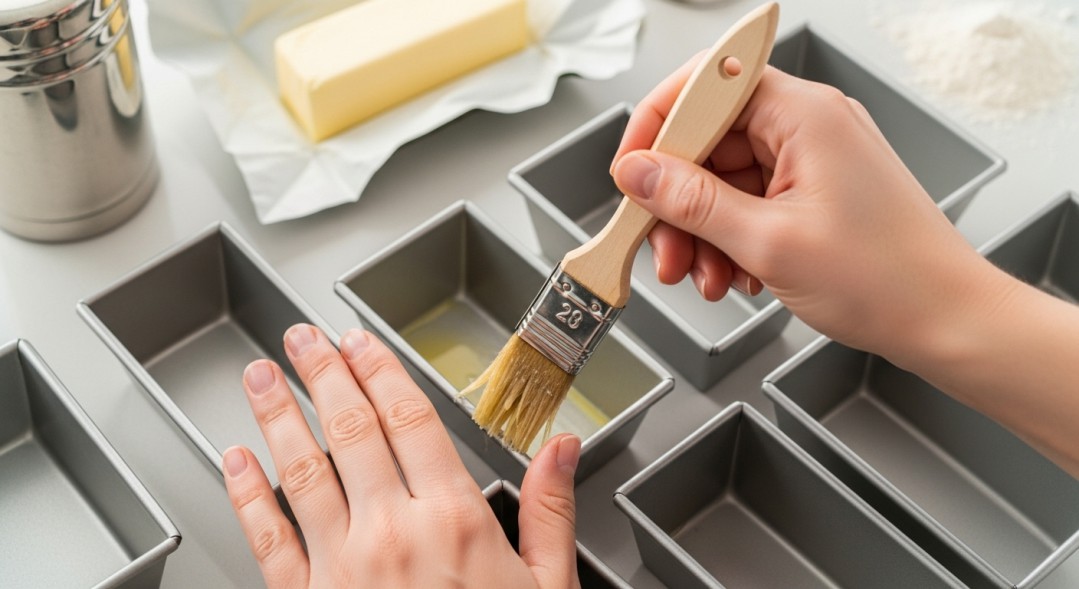
For especially sticky batters, I line the pans with parchment paper. I cut strips that run lengthwise with enough overhang on the ends to act as handles. This makes removing the loaves foolproof—just lift them right out. It's extra work, but worth it for delicate cakes that tend to stick.
Spacing matters when you're baking. If I'm using individual mini pans rather than a connected set, I space them at least an inch apart on the baking sheet. This allows air to circulate around each pan for even baking. I learned this after getting dark bottoms on tightly-packed pans while the tops were still pale.
Cooling and removal require patience. This might be the hardest lesson I've learned. I always let the pans cool on a wire rack for about 10-15 minutes before attempting to remove the loaves. Going straight from oven to removal usually results in broken loaves or chunks stuck to the pan.
After that initial cooling, I run a thin knife or offset spatula around the edges of each loaf. Then I turn the pan over and give it a firm tap on the counter. Most of the time, the loaves pop right out. If one's being stubborn, I let it sit another few minutes—the residual heat helps them release.
For silicone pans, removal is ridiculously easy. The flexibility means you can just push up from the bottom and the loaf pops out. This is honestly the main reason I keep my silicone pans around despite preferring the browning I get from metal.
Storage and care are simpler than you'd think. My aluminum pans go in the dishwasher without issues, though hand-washing helps the non-stick coating last longer. Silicone pans can go in the dishwasher too, but I find they pick up odors if I don't wash them with dish soap by hand.
I store my connected mini loaf pans flat with a paper towel between them if I'm stacking. The individual pans nest inside each other, which saves tons of cabinet space.
Common problems I've encountered and solved: Loaves sticking despite greasing usually means I didn't get butter or oil into the corners thoroughly. Uneven baking with some loaves done before others often means my oven has hot spots—rotating the pan halfway through fixes this. Dry edges with gummy centers means my temperature was too high—dropping it by 25°F usually solves the problem.Beyond Basic Baking
Once you get comfortable with the basics, mini loaf pans open up so many creative possibilities. I've pushed mine well beyond simple quick breads.
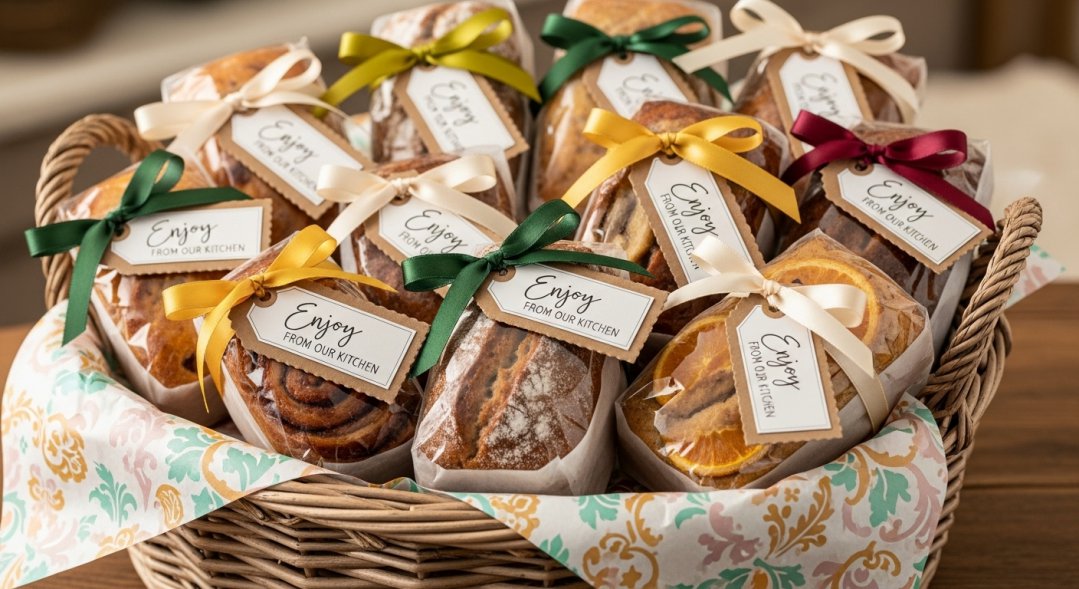
Gift-giving is where these pans really shine. Last December, I made cranberry orange bread in mini loaves for holiday gifts. I wrapped each one in cellophane with a ribbon and gave them to neighbors, coworkers, and my kids' teachers. Everyone loved getting something homemade but in a manageable size. No one wants to receive a giant loaf they feel obligated to finish before it goes stale.
I've gotten into the habit of baking double batches of banana bread or zucchini bread, then freezing individual mini loaves. They thaw in a couple hours on the counter, or I can microwave them for 30-45 seconds for a warm treat. Having these in my freezer feels like a secret weapon when someone drops by unexpectedly or I need a quick breakfast option.
Savory applications surprised me the most. Mini meatloaves have become a weeknight staple in my house. Each family member gets their own loaf, and I can customize them—my son likes his without onions, my daughter wants extra ketchup glaze. They cook in half the time of a regular meatloaf and have more of that caramelized crust everyone fights over.
I've also made mini pot pies using these pans. Instead of one large casserole, I fill each mini loaf pan with filling, top with pastry, and bake. They look impressive and make serving easy—everyone gets their own perfect portion.
For seasonal baking, mini loaf pans are perfect. During fall, I make pumpkin bread and apple cinnamon bread in bulk, giving some away and freezing the rest. Summer means lemon blueberry loaves and strawberry bread. The smaller size lets me experiment with flavors I might not commit to in a full-sized version.
My favorite recent discovery: using mini loaf pans for layered desserts. I've made mini versions of tiramisu and trifle by alternating layers of cake, cream, and fruit in the pans. They're essentially individual plated desserts that look like something from a restaurant.
Wrapping Up
After three years of regular use, mini loaf pans have earned their permanent spot in my kitchen. They're not just a novelty—they're genuinely useful for everyday baking and cooking.
The key takeaways I'd share: understand your pan sizes and measure them if you're uncertain, use the two-thirds filling rule to avoid overflow disasters, expect baking times that are 30-50% shorter than full-sized loaves, and always use the toothpick test rather than relying solely on timers.
Start with a recipe you already know and love. Converting it to mini loaves will give you confidence in the process and help you understand how the timing and filling adjustments work. My first successful batch was banana bread—a forgiving recipe that's hard to mess up even when you're learning.
The beauty of mini loaf pans is that they make baking more flexible and fun. Whether you're meal prepping for the week, creating gifts, or just want perfectly portioned treats, these little pans deliver big results.
Frequently Asked Questions
Can you bake different flavors simultaneously?
Absolutely, and this is one of my favorite things about mini loaf pans. I regularly make three or four different flavors at once—maybe banana, zucchini, and pumpkin bread all in one baking session. The key is choosing recipes with similar baking times and temperatures. I wouldn't bake a quick bread that needs 350°F next to a pound cake requiring 325°F, but most quick breads work well together.
Do all mini loaf pans bake at the same rate?
Not exactly. I've noticed my darker aluminum pans bake faster than lighter-colored ones because they absorb more heat. Silicone pans take a bit longer than metal. If you're using different types of pans in the same batch, check them individually—the metal ones will likely finish first.
What's the best way to store baked mini loaves?
Room temperature in an airtight container works for 2-3 days. I wrap each loaf individually in plastic wrap if I'm not eating them right away—this keeps them from drying out. For longer storage, I freeze them wrapped in plastic wrap and then placed in a freezer bag. They keep beautifully for up to three months.
Can you use regular recipes without adjustments?
You can pour the batter into mini pans without changing the recipe itself, but you absolutely must adjust the baking time. Using the original timing will give you burnt, dry loaves. Temperature usually stays the same, but cut the time by at least 30% and start checking for doneness earlier than you think necessary. I made this mistake exactly once before learning my lesson.
Leave a Reply