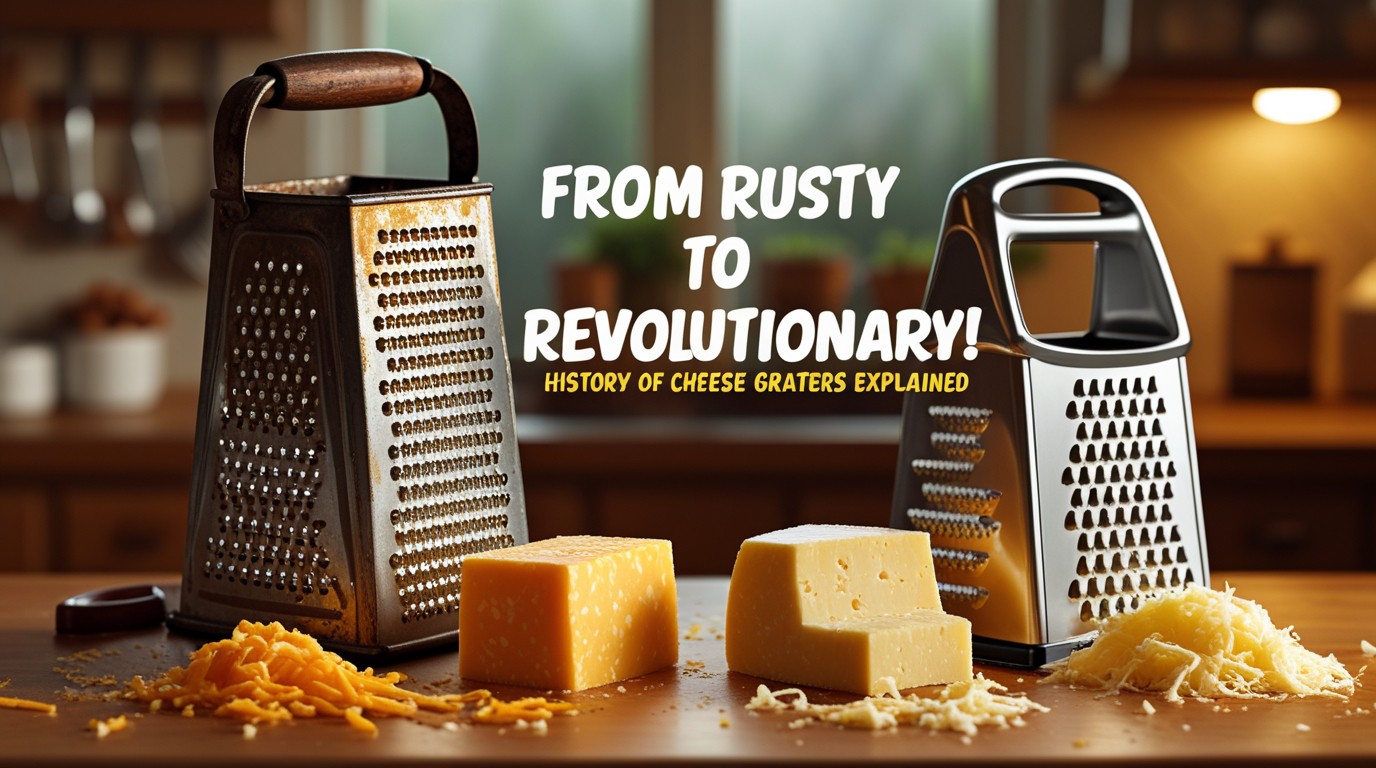
If you’ve ever stood in your kitchen wrestling with a block of cheese and a tiny metal grater, you probably share my appreciation for how far cheese grating has come. As someone who cooks almost daily and prepares everything from pizzas to casseroles and salads, I’ve used nearly every kind of grater out there. This isn’t just a history lesson—it’s a walk through time from the humble handheld tool to the modern electric grater, all told from the perspective of someone who’s had cheese stuck under their fingernails more times than I care to admit.
A Crumbly Beginning: The Origins of the Cheese Grater
The cheese grater was invented in the 1540s by François Boullier in France, during a time when people needed to make hard cheeses more usable in the kitchen. Back then, cheese would often age to the point of turning rock solid. Boullier’s invention allowed people to grate these hardened blocks and make them usable again. It was a simple tool—metal with punched-out holes—and despite the crude design, it revolutionized home cooking.
I remember buying my first box grater in college—four sides, each with a different hole size. It was cheap, clunky, and a knuckle-scraper, but it did the job. I didn’t know it at the time, but I was using a direct descendant of Boullier’s centuries-old concept.
The Evolution of Design: Making Grating More Practical
As cheese grew more varied and global trade increased, graters adapted. By the 20th century, manufacturers started mass-producing stainless steel graters with ergonomic handles and multiple blade types. I still have my grandmother’s flat grater—a single piece of metal, no plastic, no rubber grip, and still razor-sharp.
What changed the game for me, however, was the introduction of rotary cheese graters. These hand-cranked devices use a drum blade inside a plastic or metal housing. I first picked one up when I was making homemade Alfredo sauce and got tired of fighting with Parmesan. Compared to a box grater, the rotary model was more efficient and safer. Plus, no more scraped knuckles!
But rotary graters still required manual effort. Grating a full block of cheddar for mac and cheese could leave your wrist sore. That’s when I turned my eyes—and eventually my wallet—to electric cheese graters.
The Electric Era: Convenience Meets Technology
I’ll be honest: I was skeptical of electric cheese graters at first. As someone who likes the tactile feel of preparing food by hand, I worried it would be overkill. But after a few dinner parties and back-to-back batches of lasagna, I realized something had to give. Enter my first electric grater—a countertop model with multiple attachments and motorized blades.
The experience was liberating. I dropped in a wedge of Romano, pressed the button, and boom—fluffy piles of cheese in seconds. Unlike handheld versions, electric graters deliver consistent shreds without the physical strain. That matters when you’re prepping for six people and you want the cheese melted evenly on a baked ziti.
Some models also come with built-in containers to catch the cheese, which means less mess. I can’t tell you how many times I’ve spent cleaning up stray cheese flakes with a damp paper towel under a box grater. With electric versions, everything’s contained and dishwasher-safe.
A Side-by-Side Experience: Handheld vs. Electric Graters
I still use my handheld box grater when I’m in a rush or only need a tiny bit of cheese—say, a dusting of Pecorino on pasta. It’s faster to reach for and easier to clean. But if I’m making a pizza or loaded nachos, the electric one is non-negotiable.
Here’s what I’ve found in real-life use:
- Precision: Electric graters give more uniform results. This matters for even melting and presentation.
- Time-Saving: I can grate an entire block in under 30 seconds with the electric model, while the manual one takes several minutes.
- Clean-Up: Slight edge to handheld graters here. They’re simpler to rinse and dry, while electric graters come with multiple parts.
- Storage: Handhelds win in compact kitchens. My electric one needs dedicated space and an outlet.
- Control: With a manual grater, I control the pressure and speed. Electric graters are a little less forgiving with softer cheeses—they can gum up or clog the chute if the cheese is too warm or moist.
Innovations That Made Me a Believer
Modern electric graters aren’t just plug-and-play devices. Some now offer:
- Multiple grating drums for coarse, fine, or slicing.
- Non-slip bases and safety locks.
- Cordless rechargeable options (a big plus when countertop space is tight).
- Multi-purpose use—some double as vegetable slicers or nut grinders.
I upgraded recently to a model with a rechargeable battery and detachable heads. It was a game changer. I grated cheddar, chopped walnuts, and sliced zucchini—all without plugging in once. It felt like the Swiss Army knife of cheese prep.
Not All Cheese (or Graters) Are Created Equal
One thing I’ve learned is that the type of cheese matters. Soft mozzarella is best shredded cold with a coarse blade—otherwise it turns to mush. Hard cheeses like Parmesan or aged gouda work great in both manual and electric, but the electric grater saves time and wrist strain.
Also, cleaning matters. My early electric model had hard-to-reach corners that would trap cheese bits. If you’re shopping for one, look for dishwasher-safe parts and easy disassembly.
What’s Right for You?
If you cook casually or only grate cheese occasionally, a quality handheld grater will serve you just fine. They’re inexpensive, space-saving, and low-maintenance. But if you entertain often, make big meals, or simply hate manual grating, an electric cheese grater is a game changer.
As someone who’s owned—and used—them all, my advice is to consider how often you grate, how much you need, and how important speed and comfort are. If grating is a regular chore, invest in electric. It’s one of those purchases that quietly transforms your kitchen routine.
Final Thoughts: A Grate Journey
From the humble box grater to today’s sleek, multifunctional electric models, the evolution of cheese graters mirrors how far we’ve come in home cooking. What started as a tool to make hardened cheese usable has turned into a range of gadgets that save time, protect your hands, and deliver perfect results.
In my kitchen, both types of graters have their place. But when I need to prep a mountain of cheese and still have time to enjoy a glass of wine, my electric grater is my silent sous chef—and one I’ll never cook without again.
Leave a Reply