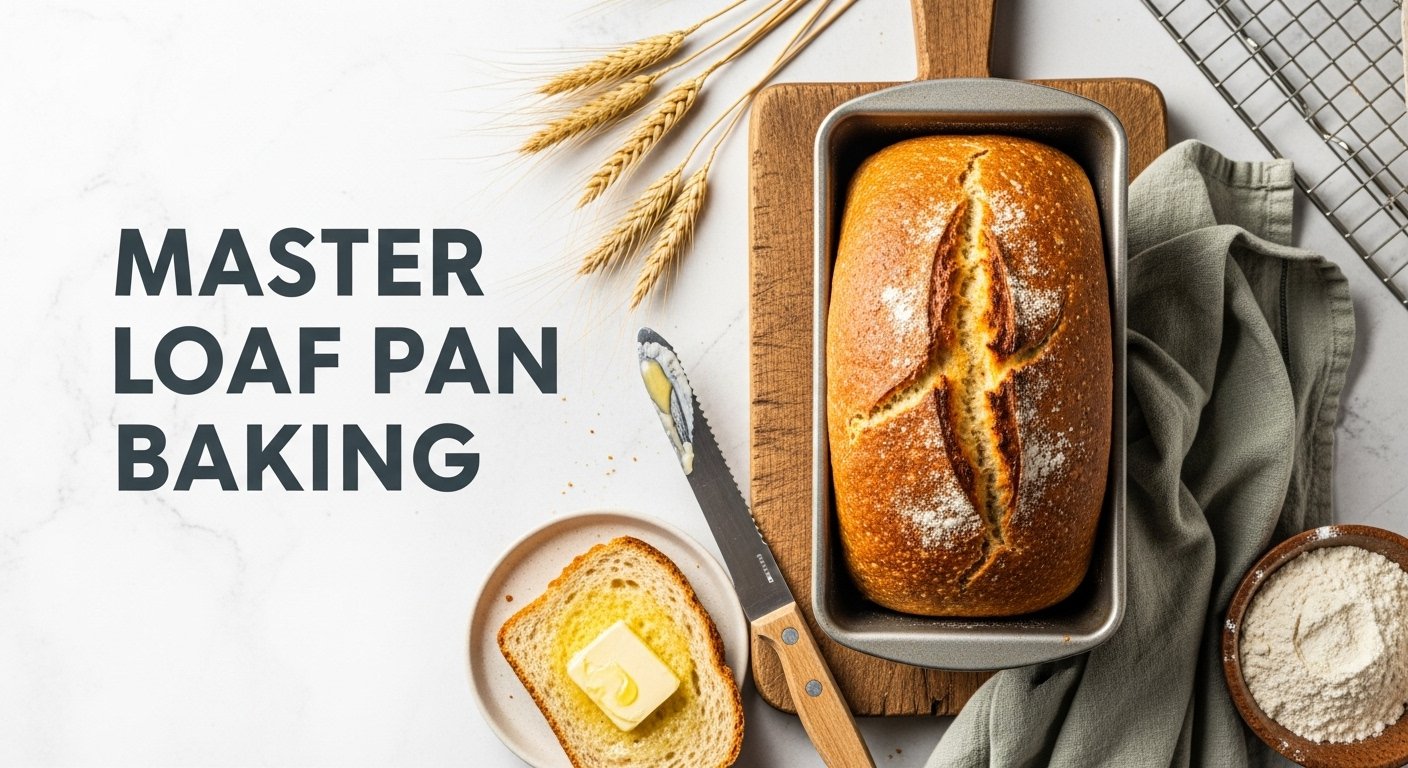
There's something deeply satisfying about pulling a perfectly golden loaf of bread from your oven, the kind that slices beautifully and makes your kitchen smell like a European bakery. I've been baking bread in loaf pans for years now, and I'll be honest—it took some trial and error to figure out what actually works versus what just sounds good in theory.
The beauty of loaf pan baking is that it gives you control. Unlike free-form loaves that can spread unpredictably, a pan contains your dough and helps it rise upward instead of outward. Whether you're a complete beginner or someone looking to level up your bread game, this guide will walk you through everything I've learned about baking bread in loaf pans, from the simplest recipes to more advanced artisan techniques.
Getting Started with Loaf Pan Bread Baking
Understanding Your Equipment
Not all loaf pans are created equal, and this matters more than you might think. I started with a cheap aluminum pan from the grocery store, and while it technically worked, I constantly battled with uneven browning and sticking issues.
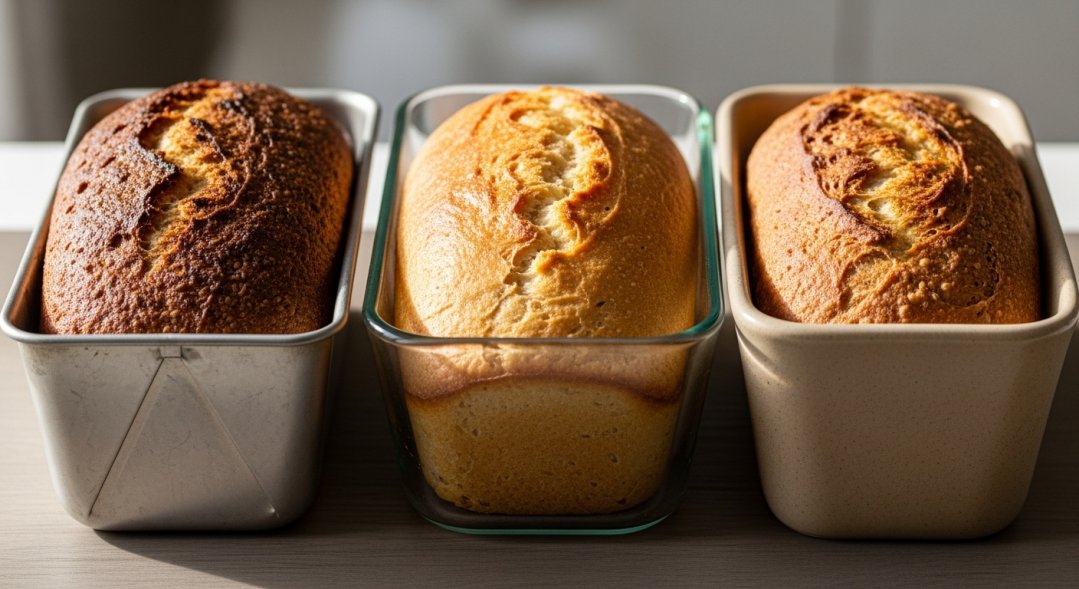
Metal pans—particularly aluminized steel or dark metal—conduct heat efficiently and give you a nicely browned crust. Glass pans bake more gently and let you peek at the bottom to check for doneness, but you'll need to lower your oven temperature by about 25°F to prevent over-browning. Ceramic pans are beautiful but heavy, and they take longer to heat up, which can affect your rise.
The standard loaf pan size is 9x5 inches, though 8.5x4.5 inches is also common. I keep both sizes in my kitchen because recipe yields vary, and using the wrong size can mean the difference between a beautifully domed loaf and one that either overflows or looks squat and sad.
How Much Dough for a Loaf Pan
This is where I made my first major mistake. I assumed more dough meant more bread, so I crammed as much as possible into my pan. The result? A mushroom-shaped disaster that was raw in the middle and burnt on the outside.
For a standard 9x5-inch pan, you want about 1 to 1.25 pounds of dough (roughly 450-570 grams). For an 8.5x4.5-inch pan, stick to about 0.75 to 1 pound. A good visual guideline is that your dough should fill the pan about two-thirds full before rising. After proofing, it should dome about an inch above the rim.
When I'm eyeballing it, I look for dough that comes to within an inch of the pan's top edge before the final rise. If your dough is significantly below that line, you'll end up with a flat loaf. Too much higher, and you risk overflow or uneven baking.
Essential Techniques and Timing
Baking Time & Temperature for Bread
Temperature is where home bakers often go wrong, myself included. I used to think cranking up the heat would give me bakery-quality results faster. Instead, I got burnt outsides and doughy centers.
Most loaf pan breads bake best at 350°F to 375°F. Simple sandwich breads do well at 350°F, while enriched doughs with butter and eggs often prefer 375°F. Rustic and artisan-style breads sometimes start at a higher temperature (425°F-450°F) for the first 15 minutes to create oven spring, then reduce to 375°F for the remainder of baking.
The real test of doneness isn't the clock—it's the thermometer. Your bread is done when the internal temperature reaches 190°F to 210°F, depending on the type. Lean breads (just flour, water, salt, yeast) are done at 205°F-210°F. Enriched breads finish around 190°F-195°F.
I also do the "thump test." When you remove the loaf from the pan and tap the bottom, it should sound hollow. If it sounds dull or dense, it needs more time.
How Long to Bake Bread in a Loaf Pan
Here's what I've found through countless loaves: a standard 9x5-inch white or whole wheat loaf takes 35 to 45 minutes at 350°F. Whole grain breads often need an extra 5 to 10 minutes because of their density.
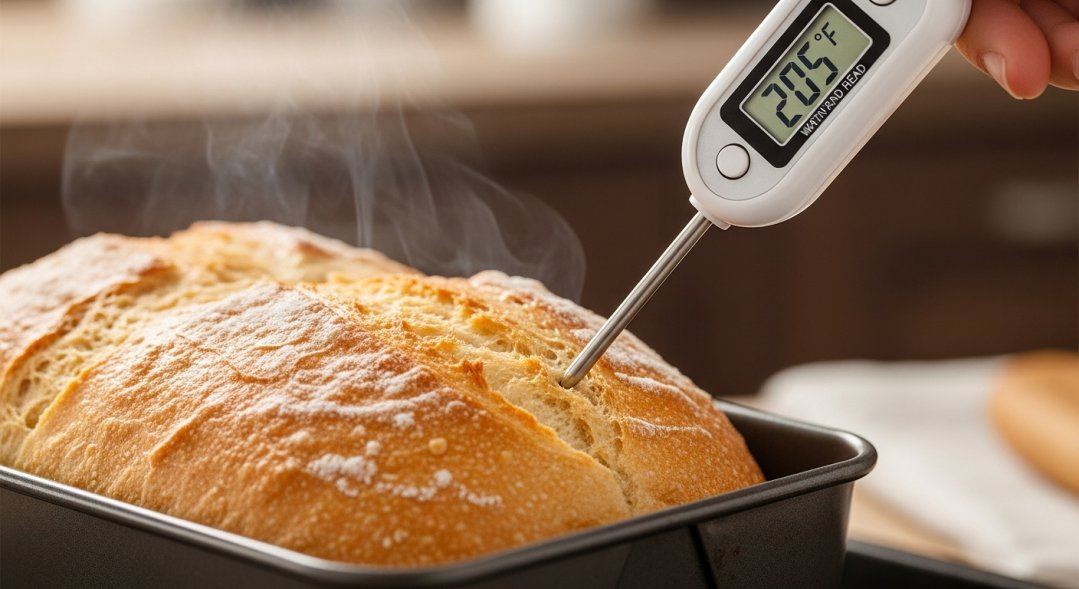
Enriched breads like brioche or challah bake faster—usually 30 to 40 minutes—because the fats and sugars brown more quickly. No-knead breads can take 45 to 55 minutes since they're wetter and denser.
Your oven matters too. My old apartment oven ran hot, and I had to reduce baking times by about 5 minutes. My current oven has a hot spot in the back right corner, so I rotate my pan halfway through baking. Get to know your oven's quirks, and don't be afraid to adjust.
Shaping and Preparation Methods
How to Shape Bread Dough for a Loaf Pan
Shaping might seem optional, but it's actually crucial for getting that professional-looking loaf with even texture throughout. I used to just plop my dough into the pan and call it good. The result was always uneven—sometimes with large air pockets or a lopsided top.
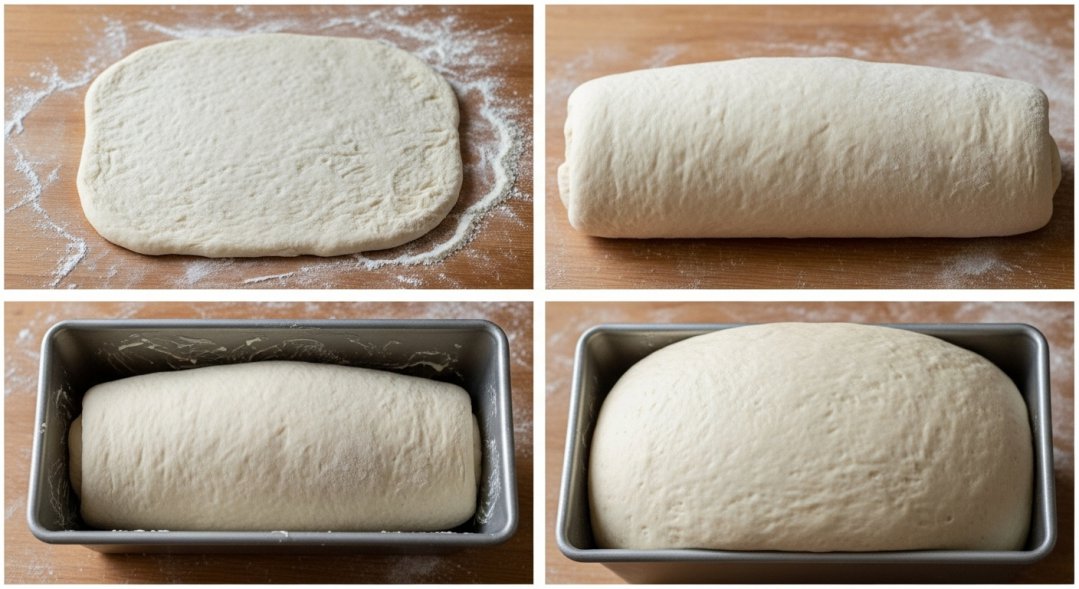
Here's my method now: After the first rise, turn your dough out onto a lightly floured surface. Press it gently into a rectangle roughly the width of your pan and about twice as long. Starting from one short end, roll the dough toward you into a tight log, using your thumbs to create tension as you go.
Pinch the seam closed along the entire length, then pinch the ends shut too. Place the loaf seam-side down in your greased pan. The tension you created helps the bread rise upward instead of spreading, and it gives you a tighter, more even crumb.
If you skip this step and just shape it into a rough ball, you'll likely get an irregular rise with weak spots where the dough spreads rather than climbs.
Preparing Your Pan
I've tried every method under the sun: butter, oil, cooking spray, parchment paper, and even leaving the pan ungreased (spoiler: terrible idea).
For regular baking, I brush my pan with softened butter or use a light coat of cooking spray. Butter adds a hint of flavor to the crust and creates a golden exterior. If I'm making a particularly sticky or sweet dough, I'll line the bottom with parchment paper and grease the sides.
One trick I learned the hard way: never use too much grease. An overly greased pan creates a fried, overly crispy bottom crust that's almost leathery. A light coating is all you need.
Classic Bread Varieties in Loaf Pans
How to Bake Bread in a Loaf Pan (Basic Method)
Let me walk you through my go-to basic white bread, the one I make at least twice a month. It's straightforward, reliable, and endlessly adaptable.
Mix 3 cups of bread flour, 2 teaspoons of instant yeast, 1.5 teaspoons of salt, 1 tablespoon of sugar, 1 cup of warm water, and 2 tablespoons of softened butter. Knead until smooth and elastic (about 8-10 minutes by hand or 5-6 minutes in a stand mixer). The dough should be soft but not sticky.
Let it rise in a greased bowl until doubled, usually 60 to 90 minutes depending on your kitchen temperature. Shape it as described above, place it in your greased 9x5-inch pan, and let it rise again until it crowns about an inch above the rim—another 30 to 45 minutes.
Bake at 350°F for 35 to 40 minutes until golden and the internal temperature hits 190°F. Let it cool in the pan for 5 minutes, then turn it out onto a cooling rack. The hardest part is waiting to slice it (warm bread compresses and tears easily, but I'm guilty of cutting into it early more often than I'd like to admit).
No Knead Bread in Loaf Pans
No-knead bread changed my life during a particularly busy period when I still wanted homemade bread but didn't have time for traditional kneading and multiple rises. The method relies on long fermentation to develop gluten instead of manual work.
Mix 3 cups of flour, 1.5 teaspoons of salt, 1/4 teaspoon of instant yeast (yes, just a quarter teaspoon), and 1.5 cups of water. It'll look shaggy and rough—that's normal. Cover the bowl and let it sit at room temperature for 12 to 18 hours. The dough will become bubbly and webbed with gluten strands.
When you're ready to bake, turn it out onto a floured surface, shape it gently (it'll be sticky, so use plenty of flour), and place it in your loaf pan. Let it rise for about 2 hours until puffy. Bake at 375°F for 45 to 50 minutes.
The texture is more rustic and open than traditional kneaded bread, with an almost chewy crust. It's perfect for sandwiches or toast, and honestly, the hands-off approach means I can start it before bed and bake it the next evening.
How to Bake French Bread in a Loaf Pan
French bread in a loaf pan sounds contradictory—isn't French bread supposed to be those long, thin baguettes? But the flavor profile and texture of French bread absolutely works in a pan, and I make it this way when I want that tangy, chewy quality without the fussy shaping.
The key is using a lean dough (flour, water, salt, yeast—no fats or sugars) and creating steam in your oven. I achieve this by placing a metal pan on the bottom oven rack and pouring boiling water into it right when I put the bread in. The steam keeps the crust soft initially, allowing for maximum expansion, then crisps up beautifully in the final stage.
Shape your French dough as you would any pan loaf, but score the top with a sharp knife or lame—three diagonal slashes work well. Bake at 450°F for the first 15 minutes with steam, then remove the water pan and reduce to 375°F for another 20 to 25 minutes.
The crust won't be quite as shattering-crisp as a traditional baguette, but you get fantastic flavor and a far more practical shape for sandwiches and everyday eating.
Artisan and Specialty Techniques
How to Bake Artisan Bread in a Loaf Pan
Artisan bread is all about depth of flavor, open crumb structure, and a substantial crust. I was intimidated by artisan techniques for years, thinking they required professional equipment or secret knowledge. Turns out, it's mostly about patience and understanding fermentation.
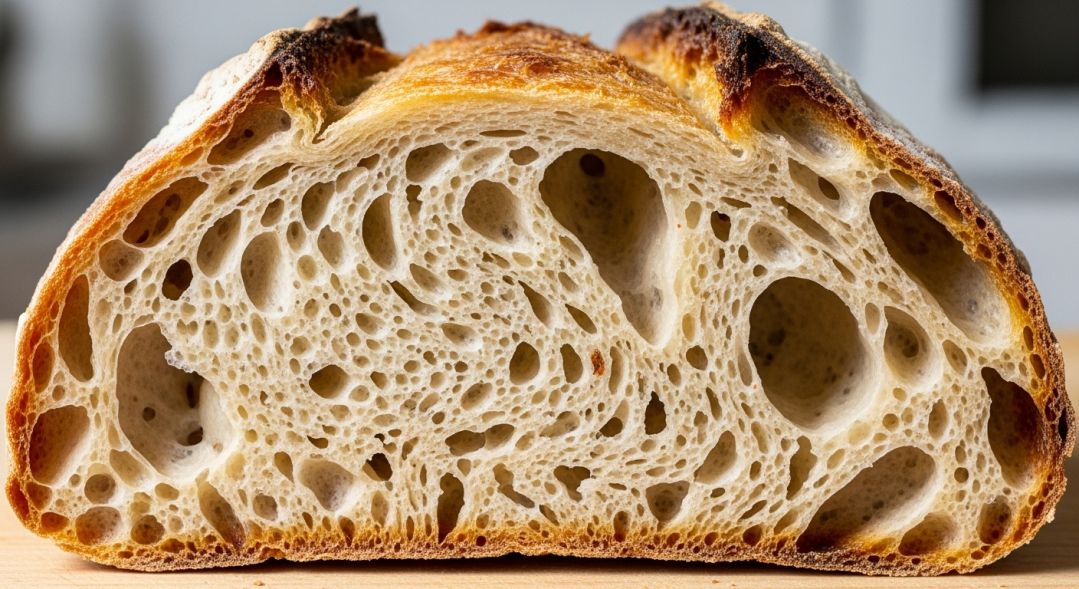
The main difference between artisan and standard bread is the hydration level and fermentation time. Artisan doughs are wetter (65%-75% hydration versus 60% for basic bread) and ferment longer, often with a pre-ferment like a poolish or biga.
I make my artisan pan bread by mixing flour, water, salt, and a tiny amount of yeast, then letting it ferment slowly in the refrigerator for 24 to 48 hours. This cold fermentation develops complex flavors you simply can't get from a quick rise.
When shaping for the pan, handle the dough gently to preserve the air bubbles that give you those characteristic irregular holes. Don't worry if it looks a bit rough or uneven—that rustic appearance is part of the charm.
Bake with steam (as described in the French bread section) starting at 450°F for 20 minutes, then reduce to 375°F until the internal temperature reaches 205°F. The result is a loaf with a crackly crust, chewy interior, and flavor that makes store-bought bread taste like cardboard.
How to Bake Sourdough in a Loaf Pan
Sourdough was my white whale for two years. I tried and failed repeatedly before finally understanding what it needed. Now I make sourdough in loaf pans regularly because it's more practical for daily use than round boules.
You need an active, bubbly starter that doubles within 4 to 6 hours of feeding. Mix your dough with a higher proportion of starter than you might use in traditional bread—I use about 20% of the flour weight in active starter.
Sourdough fermentation is slower and more temperature-dependent than commercial yeast. My typical timeline is mixing in the morning, bulk fermenting for 4 to 6 hours with stretch-and-folds every 30 minutes for the first 2 hours, shaping and placing in the pan, then cold-proofing in the refrigerator overnight.
The next morning (or up to 48 hours later), I take it straight from the fridge to a preheated 450°F oven. Score the top, add steam, and bake for 20 minutes, then reduce to 375°F and bake another 25 to 30 minutes until the internal temperature hits 205°F.
Can You Bake Sourdough in a Loaf Pan?
This is a question I get asked constantly, usually followed by "Won't it not rise properly?" or "Don't you need a Dutch oven?"
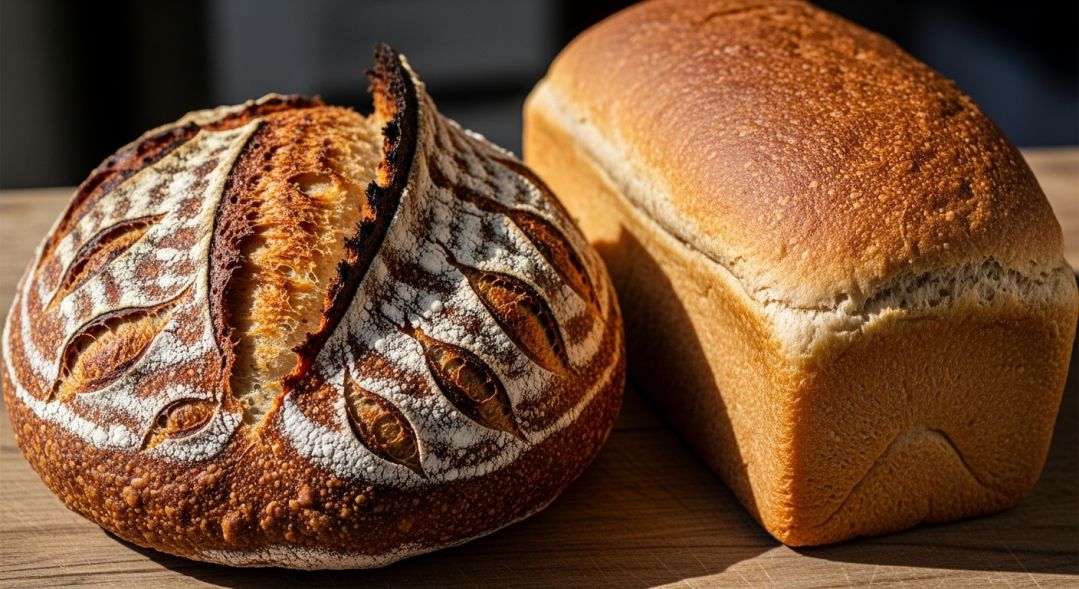
The short answer is yes, absolutely you can, and I do it all the time. The Dutch oven method is popular because it traps steam around the loaf, helping it rise dramatically. But with a loaf pan and the steam method I described earlier, you get excellent results.
The main difference is shape and crust. Dutch oven sourdough gives you a round boule with an evenly crisp crust all around. Pan sourdough gives you a rectangular loaf with a softer crust on the sides (where it touches the pan) and a crispy top and bottom. For sandwich bread, the pan method is actually superior because your slices are uniform.
I choose the pan over free-form when I want practical, everyday bread that fits in my toaster and makes neat sandwiches. I go free-form when I want an impressive centerpiece loaf for dinner guests.
Beyond the Pan
Can You Bake Bread Without a Loaf Pan?
Absolutely, and I do this regularly depending on what I'm making. Free-form loaves baked directly on a baking sheet or stone have their own charm and advantages.
Without a pan, you get crust on all sides, which means more of that delicious, crispy exterior. The loaf spreads wider and doesn't rise as tall, giving you a different shape and crumb structure. I find free-form loaves have a slightly chewier texture throughout because they're exposed to direct heat on all surfaces.
You can also use alternative vessels like Dutch ovens (my preferred method for boules), cast iron skillets, or even casserole dishes. Each one affects the final bread differently. A Dutch oven traps steam and gives you bakery-quality crust. A cast iron skillet works great for focaccia-style breads. Casserole dishes work similarly to loaf pans but give you different shapes.
The choice comes down to what you're making and what you want the final product to look and taste like. There's no single "best" method—just different tools for different outcomes.
Comparing Methods
After years of baking bread every way imaginable, here's my honest take on when to use what.
Use a loaf pan when you want uniform slices for sandwiches, when you're making a soft sandwich bread or enriched dough, when you're working with a very wet dough that would spread too much free-form, or when you want taller loaves that rise up rather than out.
Go free-form when you want maximum crust development, when you're making rustic artisan breads that benefit from an irregular shape, when you want to practice scoring and decorative techniques, or when you're making very stiff doughs that hold their shape well.
I keep coming back to loaf pans for 80% of my baking because practicality wins in daily life. Sure, a rustic boule looks amazing, but my kids' sandwiches turn out much better with evenly shaped slices from a pan loaf. Save the showstopper free-form loaves for weekends and special occasions.
Troubleshooting and Pro Tips
Let me share the problems I've faced and how I fixed them, because you'll likely run into these too.
Dense or gummy texture usually means underbaking. Even if the crust looks perfect, the interior might need more time. Always use a thermometer and give it a few extra minutes if you're unsure. I've also found that slicing bread while it's still warm compresses the crumb and makes it seem gummy—patience really does pay off.
Uneven browning often comes from oven hot spots or incorrect pan placement. I bake on the center rack and rotate my pan 180 degrees halfway through. If your top browns too quickly, tent it loosely with foil for the last 10 to 15 minutes.
Stuck loaves are the worst. Even when you think you greased the pan enough, bread sometimes refuses to budge. Let the bread cool in the pan for exactly 5 minutes, then run a thin knife or offset spatula around the edges before inverting. The brief cooling allows the crust to set and pull away slightly from the pan. Wait too long though, and steam gets trapped, making it stick more.
Mushroom tops happen when you use too much dough or let it proof too long. The dough rises over the pan edges, then the exposed parts bake faster and create an overhang. Stick to the dough quantities I mentioned earlier and watch your final proof—when the dough crowns about an inch above the rim, it's time to bake.
For maximum freshness, let your bread cool completely (I know, I know), then store it cut-side down on a cutting board covered with a clean kitchen towel. This method keeps the crust crisp while the interior stays moist. Plastic bags make the crust soft and sad. Bread boxes work great if you have one. Properly stored bread stays fresh for 3 to 4 days at room temperature.
Final Thoughts
Baking bread in loaf pans has become such a regular part of my routine that I barely think about it anymore—in a good way. It's like riding a bike; once you understand the fundamentals, you can experiment and adapt without fear.
The beautiful thing about bread baking is that every loaf teaches you something. That overproofed disaster that collapsed in the oven? Now you know what overproofed dough looks like before baking. The loaf that stuck despite greasing? You learned that cooling time matters. Each imperfect loaf brings you closer to consistently great results.
Start with the basic method, get comfortable with how dough should look and feel at each stage, then branch out to no-knead, sourdough, or artisan techniques. There's no rush. I spent six months just making basic white bread before I felt ready to tackle sourdough, and that foundation made everything else easier.
The most important thing is to actually bake. Read all the guides you want, but until you get flour on your hands and dough under your fingernails, it won't truly click. Your first loaf might not be Instagram-worthy, and that's perfectly fine. By your tenth loaf, you'll be shocked at how far you've come.
Now get in that kitchen and start baking. Your home deserves to smell like a bakery.
Frequently Asked Questions
What's the best temperature for baking bread in a loaf pan?
Most loaves do best at 350°F to 375°F. Use the lower end for soft sandwich breads and the higher end for crusty artisan-style loaves. Some recipes benefit from starting hot (450°F) for oven spring, then reducing to 375°F.
How do I know when my bread is fully baked?
Use an instant-read thermometer inserted into the center. Lean breads should reach 205°F-210°F, while enriched breads are done at 190°F-195°F. The bottom should sound hollow when tapped.
Can I use a glass loaf pan instead of metal?
Yes, but reduce your oven temperature by 25°F since glass conducts heat differently. Glass pans give you softer crusts and let you see the bottom for visual doneness cues.
Why did my bread collapse after baking?
This usually means overproofing (let it rise too long) or underbaking (didn't bake long enough for the structure to set). Make sure your dough only rises until it crowns about an inch above the pan, and bake until it reaches the proper internal temperature.
How long should I let bread cool before slicing?
At least 30 minutes, ideally an hour. I know it's tempting to cut into warm bread, but the interior is still setting during cooling. Slicing too early gives you gummy, compressed slices instead of light, fluffy ones.
Leave a Reply