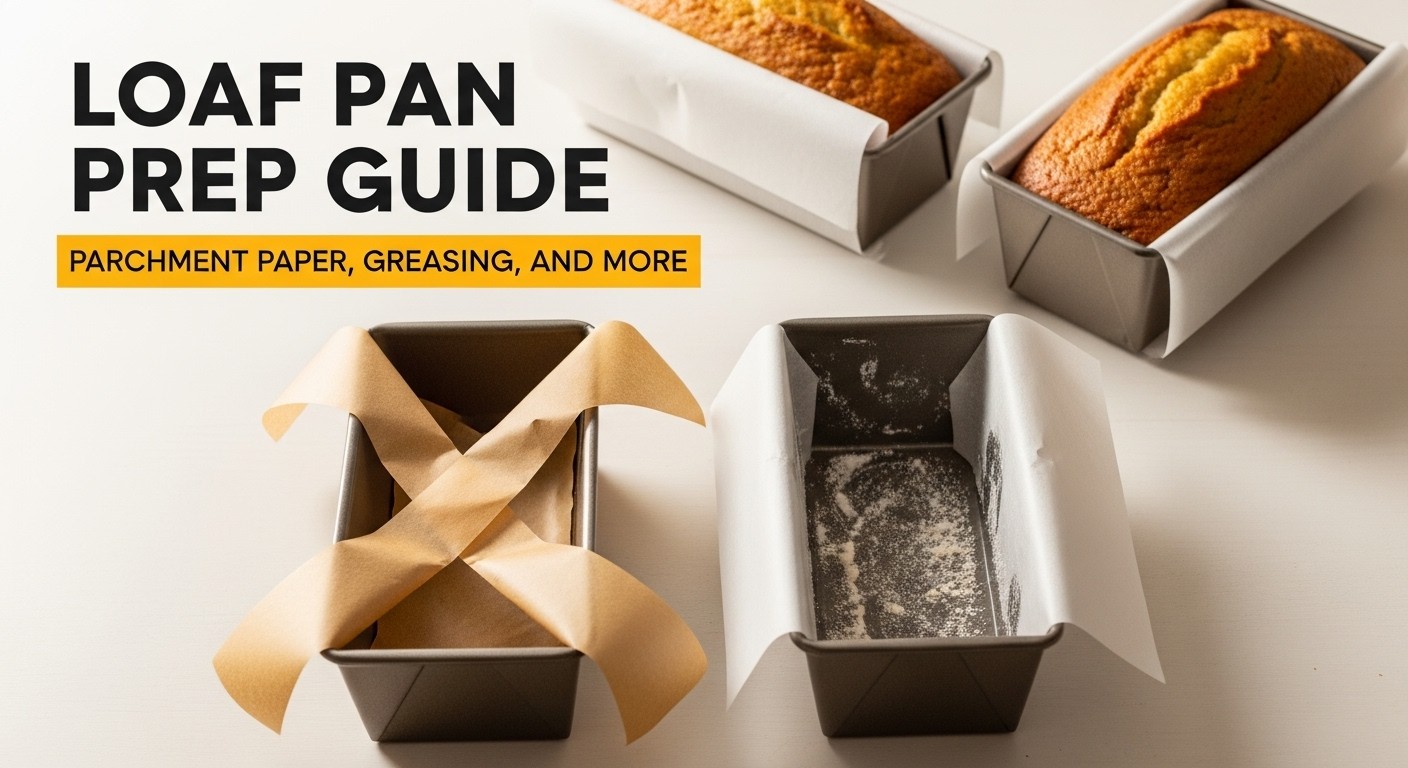
I'll never forget the first time I baked banana bread in my new loaf pan. I was so focused on getting the batter just right that I completely forgot to prep the pan. The result? A beautiful, golden loaf that absolutely refused to come out in one piece. Half of it stuck to the bottom, and I ended up serving what looked like banana bread rubble. That disaster taught me something valuable: no matter how perfect your recipe is, proper pan preparation can make or break your baking.
Over the years, I've tested every method imaginable for preparing loaf pans—from the quick spray-and-pray approach to elaborate parchment paper origami. Through plenty of trial and error (and a few more crumbled loaves), I've learned what actually works. Whether you're baking your first loaf or your hundredth, understanding how to prepare a loaf pan properly will save you from heartbreak and wasted ingredients.
Why Proper Pan Preparation Matters
Before we dive into the how-to, let's talk about why this step is so crucial. I used to think pan prep was just about preventing sticking, but it's actually much more than that.
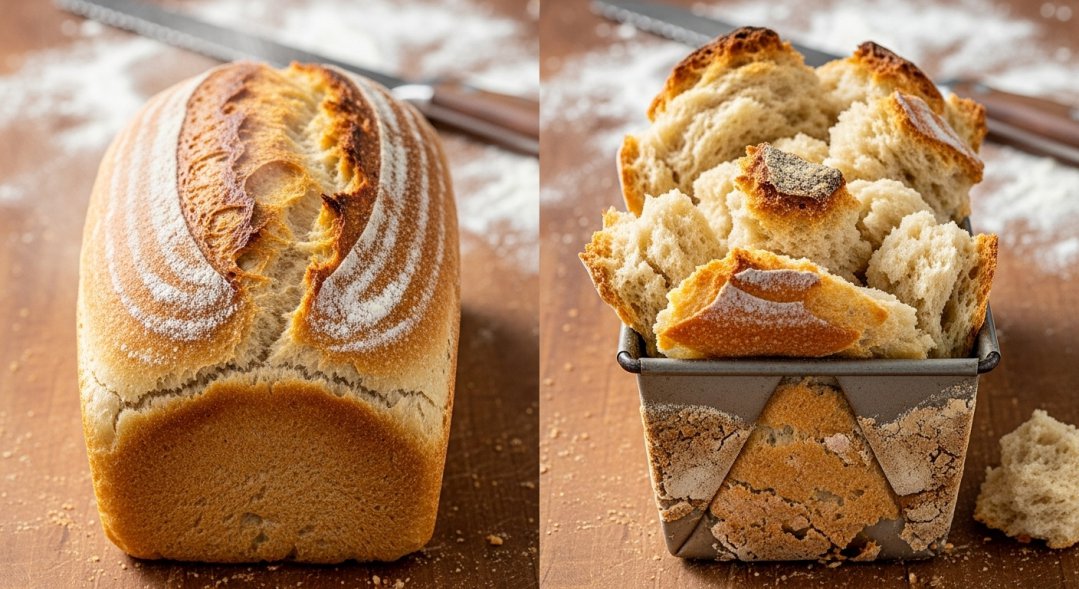
When you properly prepare a loaf pan, you're creating a barrier between your batter and the metal (or glass) surface. This barrier does several things. First, yes, it prevents sticking—but it also affects how your loaf browns. I've noticed that well-greased pans give me that gorgeous golden crust, while poorly prepped pans can lead to uneven browning or even burnt spots where the batter made direct contact with hot metal.
There's also the texture factor. A loaf that releases cleanly maintains its structure and looks bakery-worthy. Plus, let's be honest: cleanup matters. I've spent way too much time scrubbing stuck-on cake residue from pans when I skipped the prep step. Now that I take two minutes to prepare my pans properly, cleanup is usually just a quick wash.
Method 1: How to Line a Loaf Pan with Parchment Paper
Can You Line a Loaf Pan with Parchment Paper?
Absolutely! In fact, lining a loaf pan with parchment paper has become my go-to method for most recipes. I was skeptical at first—it seemed fussy—but once I got the hang of it, I realized it's actually the easiest method for ensuring a perfect release every time.
Parchment paper is particularly fantastic for quick breads, pound cakes, and brownies. The paper creates built-in handles that let you lift the entire loaf out of the pan once it's cooled. No more turning the pan upside down and praying. I've used this method for everything from lemon pound cake to zucchini bread, and I can't remember the last time I had a sticking problem.
The best part? You get incredibly clean edges on your loaf. When I'm making something I want to gift or photograph, parchment lining is non-negotiable.
How to Cut Parchment Paper for a Loaf Pan
Here's where things get interesting. I've tried several approaches to cutting parchment paper for a loaf pan, and I've landed on two methods that work beautifully.
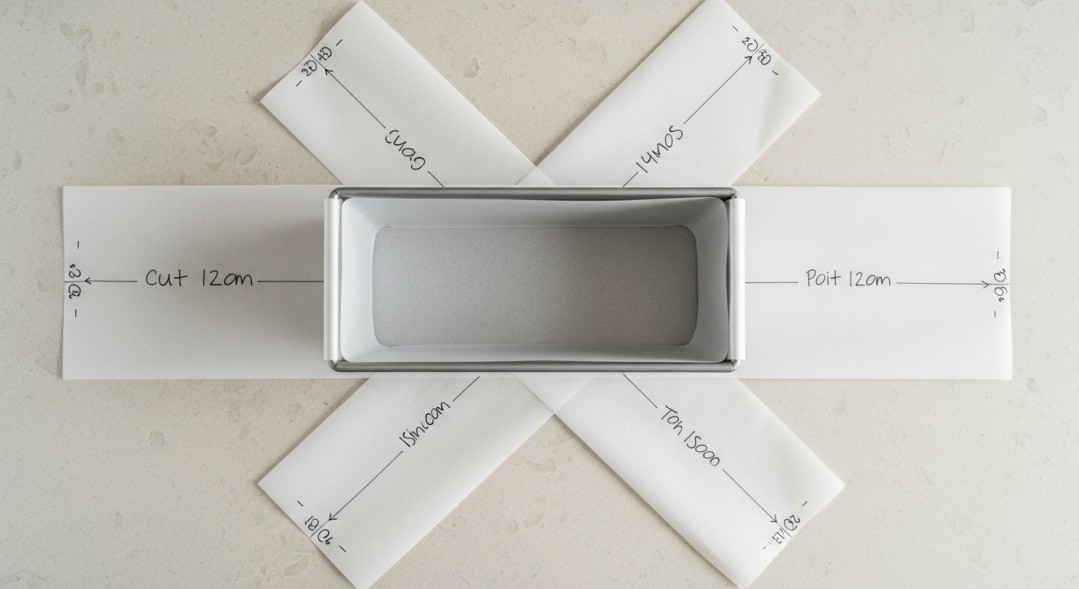
My standard 9x5-inch loaf pan gets one of two treatments. For the cross-sling method, I cut two strips of parchment paper. The first strip runs the length of the pan—I measure about 9 inches wide and 16 inches long. This gives me about 3-4 inches of overhang on each end. The second strip runs across the width—about 5 inches wide and 12 inches long.
The single-sheet method requires a bit more cutting but creates fewer seams. I lay my loaf pan on a sheet of parchment and trace around the bottom. Then I measure the height of my pan walls (usually about 3 inches) and add that measurement plus an extra inch to each side. This creates one piece with flaps that fold up the sides.
Honestly? I usually go with the cross-sling method because it's faster and the "handles" it creates are more substantial. But when I'm making something really sticky like caramel banana bread, the single-sheet method provides more complete coverage.
How to Fit Parchment Paper in a Loaf Pan
The first time I tried to fit parchment paper in a loaf pan, I ended up with something that looked like crumpled tissue paper. The trick is working methodically and not overthinking it.
For the cross-sling method, I start with my greased pan—yes, I lightly grease even when using parchment, which I'll explain in a moment. I lay the first strip lengthwise in the pan, pressing it firmly against the bottom and up the two short ends. The paper will naturally want to bow up in the middle, so I use my fingers to smooth it flat against the bottom. Then I lay the second strip width-wise, pressing it into the bottom and up the long sides.
The corners will have little pleats or overlaps, and that's completely fine. I used to try to make everything perfectly smooth, but I've learned those wrinkles don't affect the final product at all. In fact, they sometimes create interesting texture on the sides of the loaf that I actually like.
One tip I wish someone had told me earlier: slightly damp hands help smooth the paper into place without tearing it. Parchment is pretty sturdy, but aggressive dry fingers can rip it, especially in the corners where it's folded.
Make sure you have at least two inches of overhang on all sides. This becomes your lifting mechanism later. I learned this the hard way when I trimmed the overhang too short on a batch of brownies and had to pry them out with a spatula anyway—defeating the whole purpose of the parchment.
Do You Need to Grease a Loaf Pan When Using Parchment Paper?
This is probably the question I get asked most often, and my answer surprises people: I almost always give my pan a light coating of oil or cooking spray before adding parchment paper.
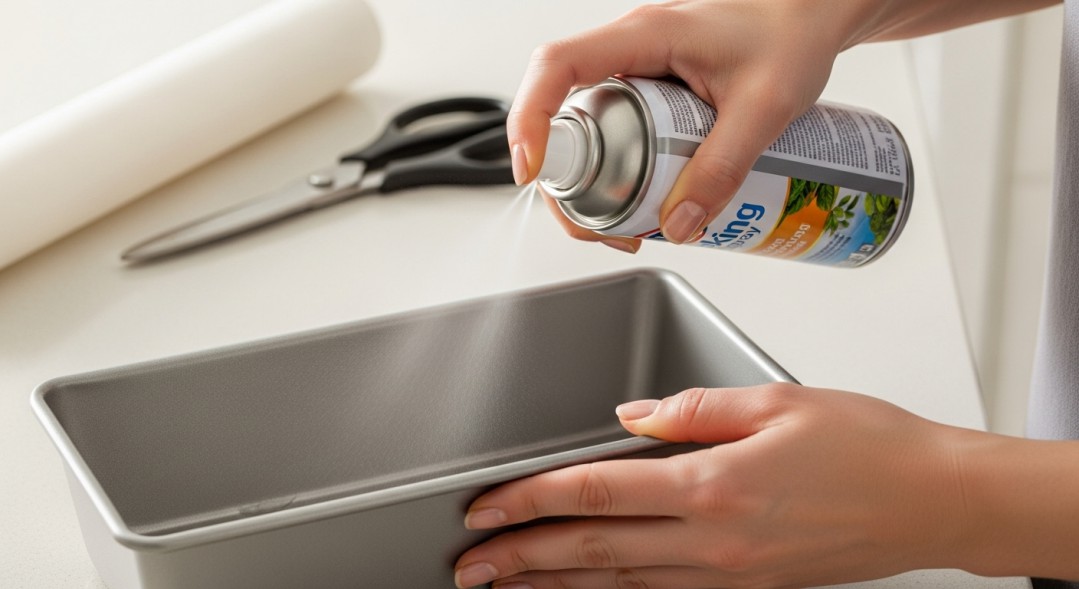
Here's why. That thin layer of grease helps the parchment paper adhere to the pan walls instead of sliding around when you pour in the batter. I've had parchment shift mid-pour, creating gaps where batter can seep underneath—which sort of defeats the purpose.
The exception? If I'm making something with a lot of butter in the batter, like pound cake, I sometimes skip the greasing step because enough fat releases during baking to prevent any issues. But for lean batters like regular sandwich bread, that light spray makes a noticeable difference in how well the paper stays in place.
Method 2: How to Grease a Loaf Pan
Traditional Greasing Techniques
Before I discovered the magic of parchment paper, greasing was my only method—and honestly, it's still what I reach for when I'm in a hurry or making certain recipes.
The key to greasing a loaf pan successfully is thoroughness. I keep a small container of softened butter on my counter specifically for this purpose, though I've also used vegetable oil, coconut oil, melted butter, and cooking spray with good results. Each fat has slightly different properties—butter adds a bit of flavor and promotes browning, while neutral oils are better for delicate cakes where you don't want any competing flavors.
My technique involves using a folded paper towel or a pastry brush. I dip it into my fat of choice and apply it to every surface of the pan in a thin, even layer. And I mean every surface—the bottom, all four sides, and especially those corners where the sides meet the bottom. Those corners are sticking danger zones.
I've found that a light touch works better than slathering on fat. Too much grease can pool at the bottom and create a slightly greasy layer on your loaf, while too little leaves vulnerable spots. You want enough that the pan looks slightly shiny but not so much that you can see it pooling.
Cooking spray seems convenient, and I won't lie—I use it sometimes. But it doesn't give you the same control as hand-applied fat. I've noticed better, more consistent results with butter or oil applied with a paper towel.
How to Butter and Flour a Loaf Pan
This is the old-school method my grandmother taught me, and it remains my favorite technique for delicate cakes and sweet breads. The butter-and-flour method creates a barrier that's especially effective for batters with higher sugar content, which tend to stick more readily.
First, I butter the pan thoroughly using softened (not melted) butter. Room temperature butter spreads more easily and creates a better coating than cold or melted butter. I use a paper towel to work it into every corner and crevice.
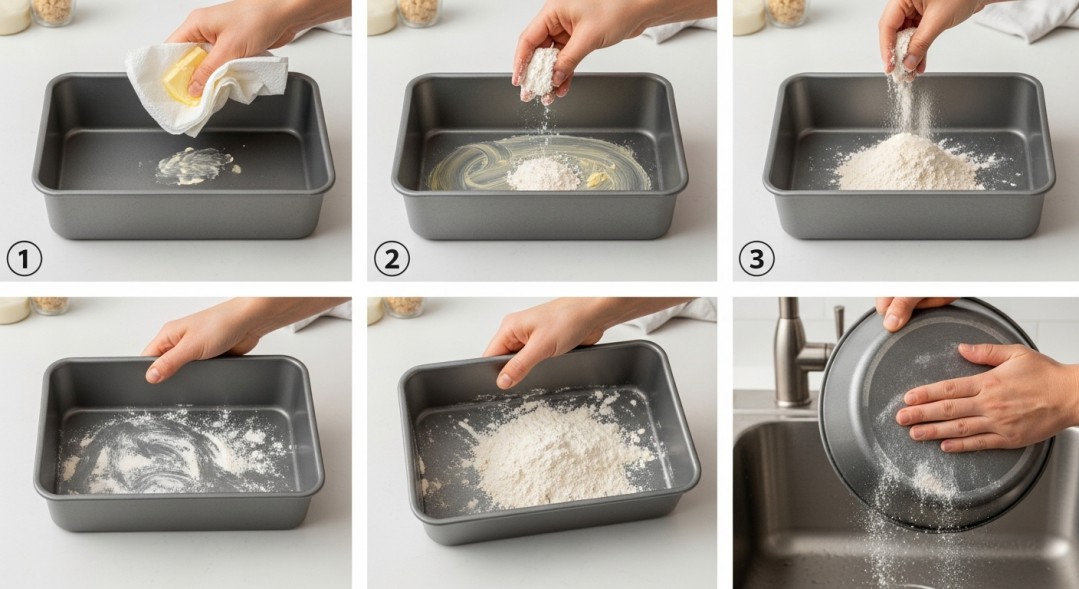
Then comes the flour. I add about two tablespoons of all-purpose flour to the buttered pan, then tilt and tap the pan to distribute the flour across all surfaces. I rotate the pan continuously, tapping the sides gently, until every greased spot has a light dusting of flour. The flour sticks to the butter, creating a non-stick coating.
The final step—and don't skip this—is turning the pan upside down over the sink and giving it a good tap to remove excess flour. You want a light, even coating, not clumps of flour that will show up on your finished loaf.
Here's a pro tip I learned from a pastry chef friend: when making chocolate loaves or brownies, use cocoa powder instead of flour. Same technique, but the cocoa powder won't leave white streaks on your dark baked goods. Game changer.
This method works beautifully for pound cakes, coffee cakes, and quick breads. I've had consistently excellent results with it, though it does require a bit more time and creates more dishes than just using parchment paper.
Method 3: How to Use Foil for a Loaf Pan
I'll be honest—aluminum foil wasn't even on my radar for loaf pans until a friend showed me her method for making brownies. Now I reach for foil in specific situations, and it's become an invaluable tool in my baking arsenal.
Foil shines when you're making bars, brownies, fudge, or anything you'll want to cut into neat squares. The advantage over parchment is that foil is more rigid and holds its shape better, which creates even cleaner edges. Plus, foil can go from freezer to oven without any issues, making it perfect for no-bake recipes that need to set.
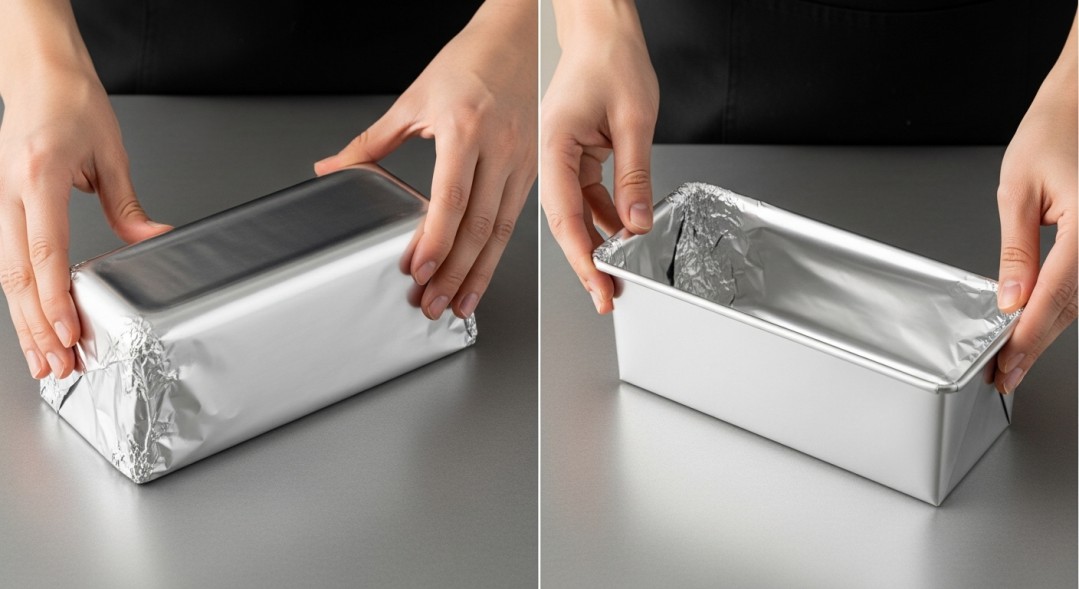
Creating a foil sling is similar to the parchment method, but easier in some ways because foil is stiffer. I tear off a piece of foil that's several inches longer than my pan. Then I flip my loaf pan upside down and press the foil over the bottom and down the sides, molding it to the pan's shape. This pre-forms the foil, making it easier to nestle into the pan right-side-up.
Once I've shaped the foil, I lift it off the upside-down pan, flip my pan right-side-up, and settle the pre-formed foil inside. The result is a perfectly fitted liner with handles on both ends.
Here's the critical part with foil: you absolutely must grease it. Unlike parchment paper, which has natural non-stick properties, aluminum foil will definitely stick to your baked goods if left ungreased. I use butter or cooking spray and make sure to coat the foil thoroughly.
I don't use foil for everything—it's not great for delicate cakes because it can tear more easily than parchment during removal. But for dense, sturdy items like brownies or no-bake cheesecake bars, foil is actually my preferred method.
Comparison Chart: Which Method Should You Use?
After years of baking in loaf pans, I've developed some strong opinions about which preparation method works best for different situations. Let me break down what I've learned.
When I'm making quick breads like banana bread, zucchini bread, or pumpkin bread, lining with parchment paper in a loaf pan is my first choice. These loaves can be dense and moist, making them prone to sticking, and the parchment handles make removal foolproof. The slight extra time spent cutting and fitting the parchment is worth it for the stress-free release.
For traditional yeast breads, I actually prefer just greasing the pan. Bread dough is usually less sticky than cake batter, and a well-greased pan provides plenty of release. Plus, I like the crispy crust that forms when the dough touches the greased metal directly. Parchment can sometimes create a slightly softer crust, which isn't what I want for sandwich bread.
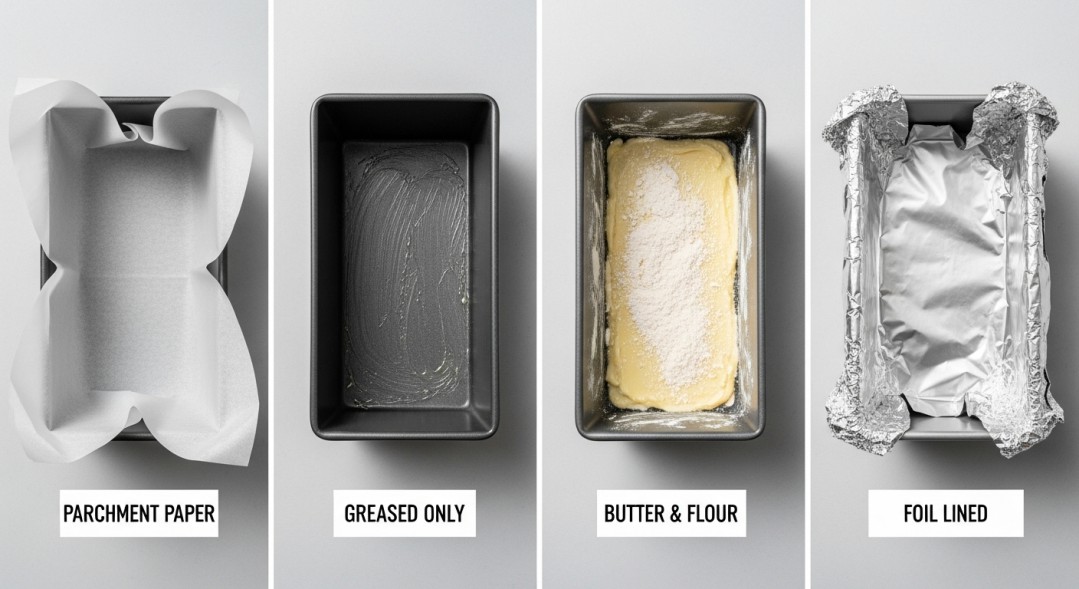
The butter and flour method is my go-to for pound cakes, coffee cakes, and anything with a cake-like crumb. Something about that flour coating creates the perfect release for delicate cakes that might otherwise leave a layer behind. I've never had a pound cake stick when I've used this method properly.
Brownies and bar cookies get the foil treatment in my kitchen. Being able to lift out the entire block and cut perfect squares on a cutting board is so much easier than trying to cut them in the pan. Plus, foil holds up better than parchment when cutting through dense, fudgy brownies.
For super sticky items like caramel-based breads or anything with a lot of honey, I use a combination approach: parchment paper plus a light greasing. This double-layer protection has saved me from numerous sticky disasters.
If I'm honest, my laziest method is cooking spray alone. It works fine for simple recipes when I'm in a rush, but it's not my recommendation if you want consistently perfect results.
Common Mistakes to Avoid
I've made every pan-prep mistake in the book, so let me save you some trouble by highlighting the pitfalls I've learned to avoid.
The biggest mistake? Using wax paper instead of parchment paper. I did this exactly once, and it was a disaster. Wax paper is not heat-resistant—the wax melts in the oven, creating a sticky mess and potentially smoking up your kitchen. Wax paper is for wrapping cold sandwiches, not lining baking pans. Trust me on this one.
Insufficient greasing in corners is another trap I fell into early on. I'd carefully grease the sides and bottom but barely touch that corner seam where they meet. Guess where my loaves always stuck? Yep. Now I pay special attention to those corners, really working the butter or oil into that 90-degree angle.
When using parchment paper, not allowing enough overhang is frustrating. I need at least two inches—preferably three—extending beyond the pan edges. Otherwise, I can't grip the paper firmly enough to lift the loaf cleanly. Short overhang means I'm back to prying with spatulas, and what's the point of parchment if I'm doing that?
On the flip side, I've also learned that too much fat is a real issue. When I first started baking, I thought more was better and would absolutely slather my pans with butter. The result was loaves with greasy bottoms and sides. A thin, even coating is all you need.
Finally, skipping preparation altogether—my original sin. I know it seems like an extra step when you're eager to get your batter in the oven, but I promise those two minutes of prep save you from fifteen minutes of frustration later. Every single time I've thought "this batter seems pretty non-stick, I'll probably be fine," I've regretted it.
Special Considerations
Not all loaf pans are created equal, and I've learned that different types require slightly different approaches.
My non-stick loaf pan is definitely more forgiving than my regular aluminum ones. With non-stick pans, I can sometimes get away with just a light coating of cooking spray, even for sticky batters. However, I've found that over time, the non-stick coating degrades—especially if you use metal utensils in the pan. Once I notice that my "non-stick" pan is starting to stick, I treat it like a regular pan and use full preparation methods.
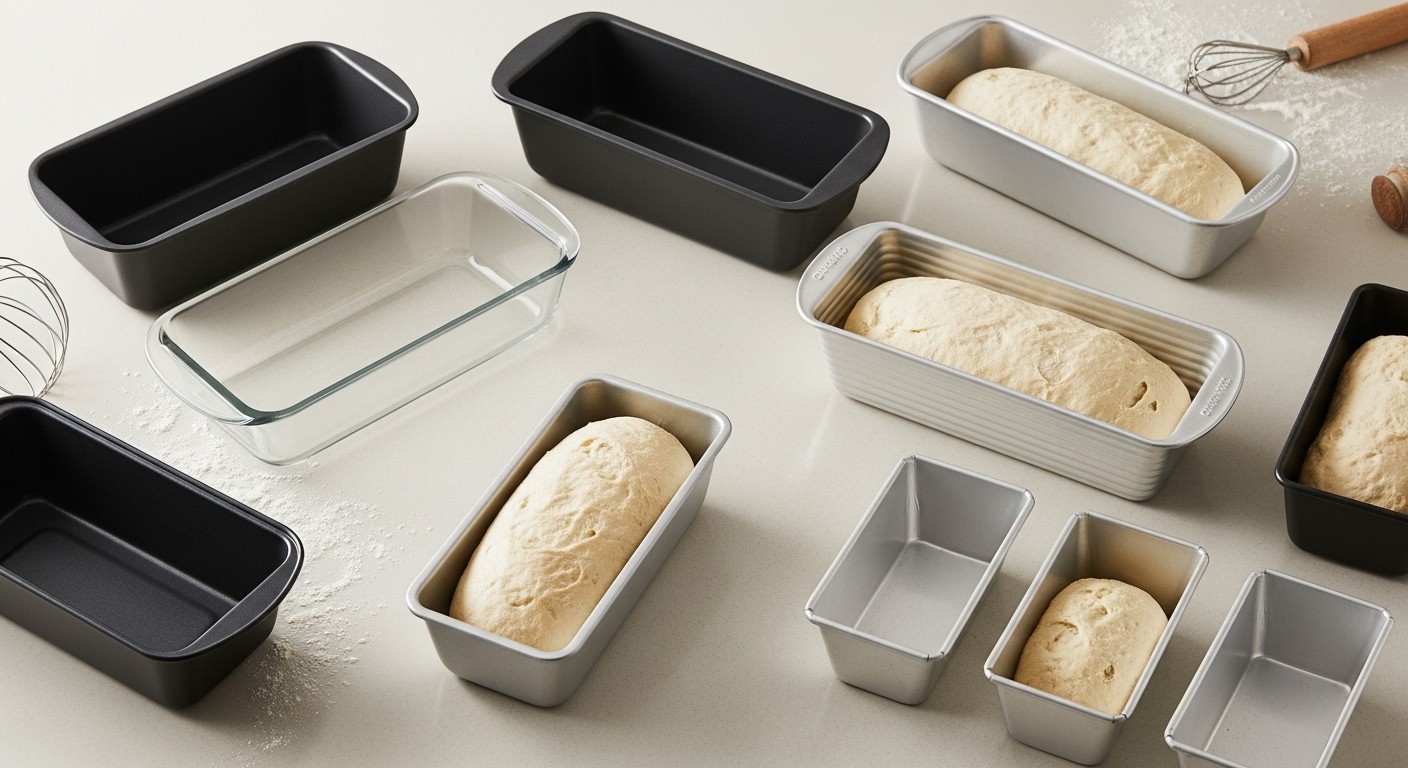
Glass loaf pans heat differently than metal ones. Glass is a poor conductor of heat, so it heats more slowly but retains heat longer. I've noticed that loaves baked in glass pans can stick more readily on the bottom because that base gets quite hot and stays hot. For glass pans, I'm religious about using parchment paper or the butter-and-flour method. Just greasing isn't enough.
Metal pans—both aluminum and darker steel—are my workhorses. They heat evenly and release well when properly prepared. The one thing I've learned is that dark metal pans absorb more heat and can create darker, crispier crusts. If I'm using a dark pan, I either lower my oven temperature by 25°F or watch the baking time more carefully.
Mini loaf pans are adorable but fiddly to prepare. Cutting parchment to fit multiple small pans is tedious, so for minis, I usually just butter and flour them thoroughly. The smaller size means loaves release more easily anyway, and the time saved is worth it when I'm making six or eight little loaves at once.
One more consideration: pan age and condition matter. My old, scratched-up loaf pan requires more careful preparation than my newer ones. Those scratches and worn spots are places where sticking can occur, so I don't cut corners with older pans.
My Final Thoughts on Pan Preparation
After hundreds of loaves—some perfect, some disaster-worthy—I've come to appreciate that proper pan preparation isn't just a nice-to-have step. It's the foundation of successful loaf baking.
Here's what I want you to take away from my experience: there's no single "best" method for preparing a loaf pan. The right choice depends on what you're baking, what tools you have available, and honestly, how much time and effort you want to invest. Parchment paper lining gives me the most consistent, foolproof results, but it's not always necessary. Sometimes a quick butter-and-flour treatment is perfect. Other times, foil is the star.
The key is understanding your options and choosing intentionally rather than defaulting to whatever's quickest. Since I started paying attention to pan preparation, my success rate has skyrocketed. I rarely have sticking problems anymore, my loaves look more professional, and cleanup is infinitely easier.
My advice? Start with the parchment paper method and master it. Once you're comfortable with that, experiment with other techniques for different recipes. Pay attention to what works for your specific pans and baking style. Keep notes if you're like me and can't remember which method you used for that perfect zucchini bread six months ago.
Most importantly, don't skip this step. I know it's tempting when you're excited to get baking, but those two minutes of preparation will save you from the heartbreak of a destroyed loaf and a ruined pan. Your future self will thank you when that beautiful loaf slides out perfectly, ready to slice and serve.
Now, if you'll excuse me, I have a lemon pound cake calling my name—and yes, I'm definitely lining that pan with parchment paper.
Leave a Reply