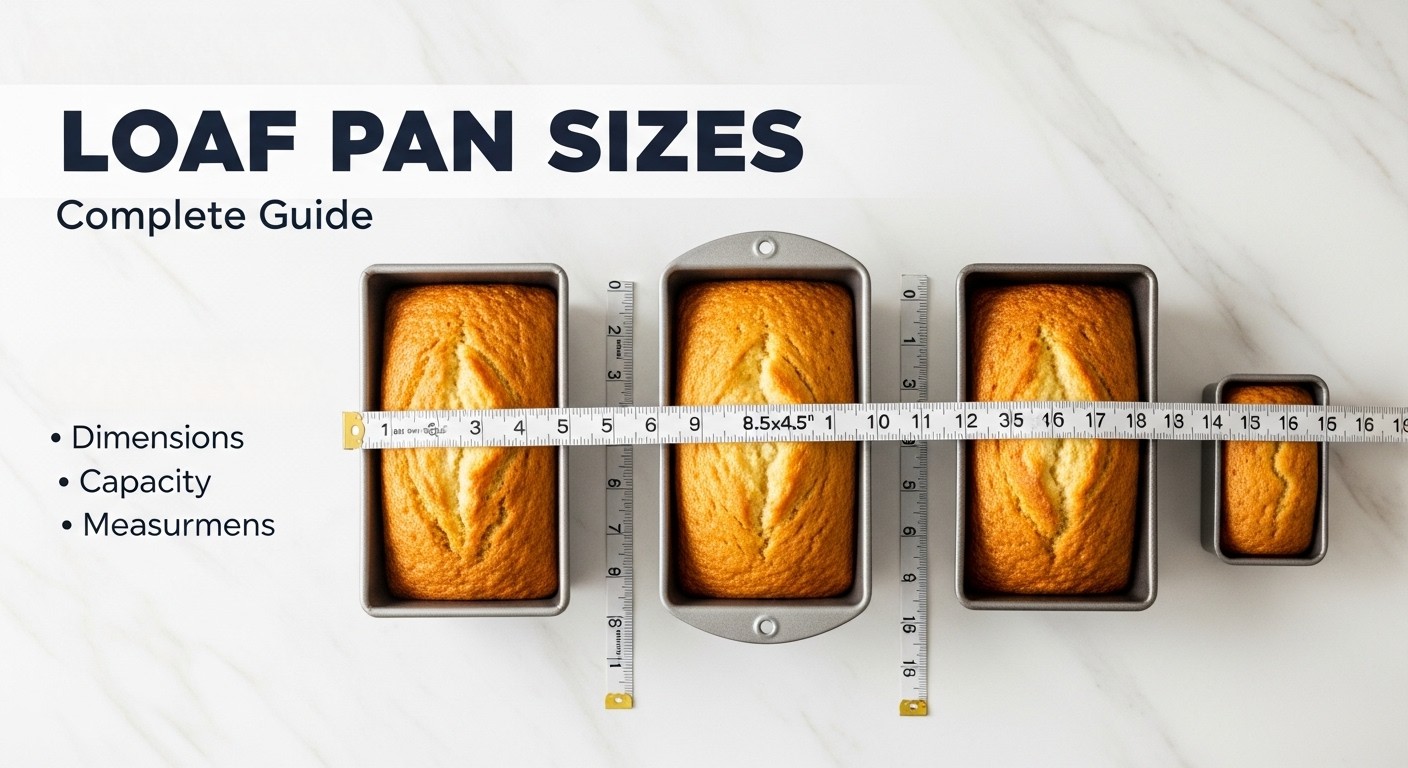
I'll never forget the first time I tried to bake my grandmother's famous banana bread recipe. I grabbed what I thought was a standard loaf pan from my cabinet, mixed up the batter with care, and popped it in the oven. Twenty minutes later, I opened the oven door to find batter bubbling over the edges and dripping onto the oven floor. That's when I learned that not all loaf pans are created equal—and understanding their sizes actually matters more than I'd ever imagined.
If you've ever had bread that overflowed, turned out too flat, or baked unevenly, the culprit might not be your recipe or technique. It could simply be the wrong pan size. In this guide, I'm going to walk you through everything I've learned about loaf pan dimensions, capacity, and how to measure them properly. Whether you're a seasoned baker or just getting started, understanding these measurements will transform your baking results.
Understanding Standard Loaf Pan Size
The Industry Standard: 9x5 Loaf Pan Specifications
When most recipes call for a "standard loaf pan," they're talking about the 9x5 inch size. This has become the gold standard in American baking, and for good reason. The typical 9x5 loaf pan measures 9 inches long, 5 inches wide, and about 3 inches deep. However—and this is important—I've discovered that not all 9x5 pans are exactly the same.
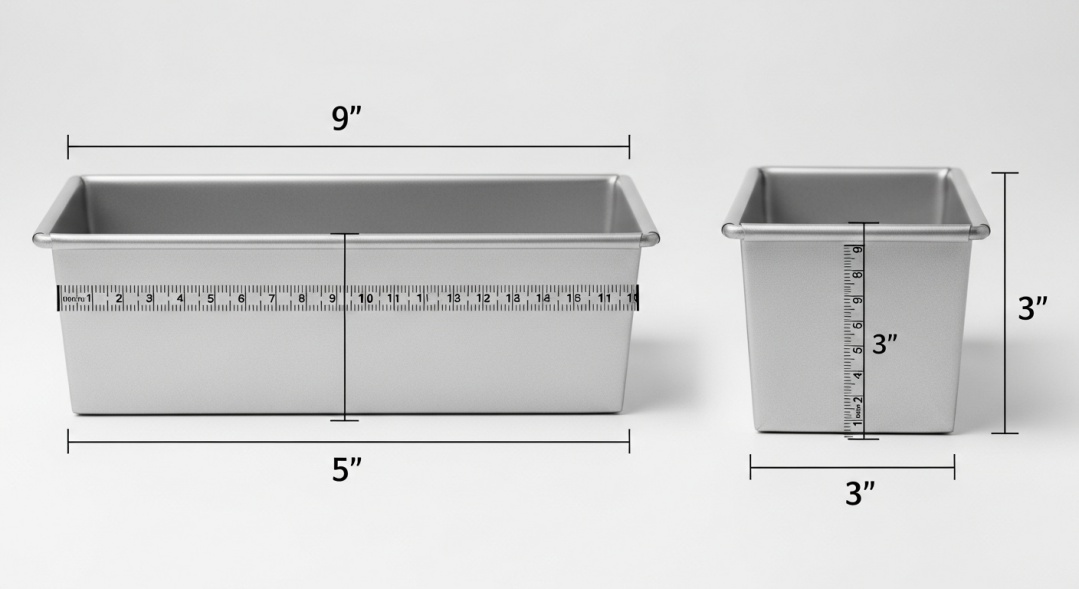
Some manufacturers make their pans 2.75 inches deep instead of 3 inches. That quarter-inch difference might not sound like much, but it affects how much batter your pan can hold and how your finished loaf will look. I learned this the hard way when I bought a second "9x5" pan and suddenly my breads weren't rising the same way. When I measured both pans, I found one was actually a bit shallower than the other.
The 9x5 size became standard because it creates that classic loaf shape we all recognize—tall enough to slice nicely for sandwiches, but not so narrow that it topples over or bakes unevenly. It's the Goldilocks of loaf pans: just right for most quick breads, pound cakes, and even meatloaf.
How Deep is a Loaf Pan? Height Matters More Than You Think
The depth of a loaf pan is something I never paid attention to until it started affecting my results. Most standard loaf pans range from 2.5 to 3 inches deep, but that half-inch variation makes a real difference in how your batter rises and bakes.
I've used both deeper and shallower pans, and here's what I've noticed: deeper pans (around 3 inches) give you those beautiful, tall loaves that look bakery-worthy. They're perfect for recipes with a lot of rise, like yeast breads or recipes with baking powder. Shallower pans (closer to 2.5 inches) work better for denser batters like some pound cakes or when you want a wider, flatter loaf.
Professional bakers often prefer the full 3-inch depth because it gives them more control over the loaf's shape and allows for that gorgeous dome on top. At home, I now keep both depths on hand because they each have their place. The key is knowing which one your recipe expects—and adjusting accordingly if you're using something different.
What is the Capacity of a Loaf Pan?
Volume Measurements Explained
Here's where things get really practical. Understanding what is the volume of a loaf pan helps you know whether a recipe will actually fit. The volume is the total amount of space inside the pan, and it's usually measured in either cups or liters.
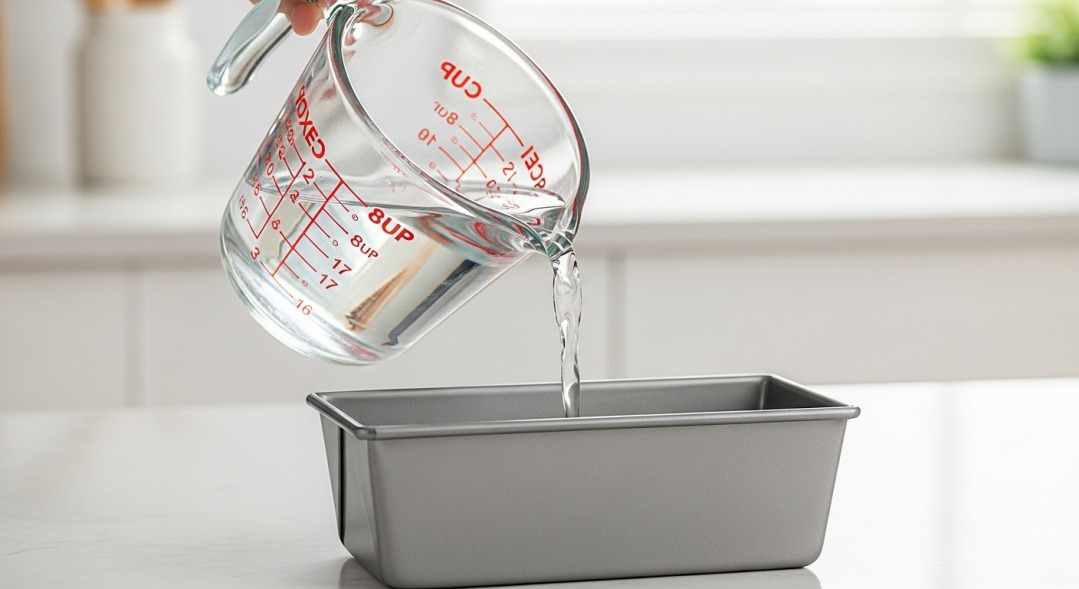
A standard 9x5x3 inch loaf pan holds approximately 8 to 10 cups of batter, depending on the exact depth. In metric terms, that's about 2 to 2.4 liters. I've found that most of my 9x5 pans hover around the 8-cup mark, which is a good number to remember when you're adapting recipes or trying to figure out if your pan will work.
Smaller pans, like the 8.5x4.5 inch size, typically hold about 6 cups. This matters because if you try to pour 8 cups of batter into a 6-cup pan, you're going to have the same overflow situation I had with my grandmother's banana bread. Trust me, it's not fun to clean.
How Many Cups Does a Loaf Pan Hold? The Practical Answer
When I first started paying attention to capacity, I realized that the "how many cups does a loaf pan hold" question is crucial for recipe success. But here's the thing: you should never fill a loaf pan to the brim with batter.
The general rule I follow is to fill the pan about two-thirds full. So if my pan holds 8 cups total, I shouldn't pour in more than about 5 to 5.5 cups of batter. This leaves room for the batter to rise without overflowing. I've tested this repeatedly, and it's the sweet spot for most quick bread and cake recipes.
For yeast breads that rise significantly, I'm even more conservative and only fill the pan half to two-thirds full before the first rise. This prevents that overflow disaster and ensures even baking. When I ignore this guideline and fill my pan too full, I always regret it—the center stays gummy while the edges overcook, and I end up with a mess in the oven.
How to Measure a Loaf Pan: Step-by-Step Guide
How to Measure Loaf Pan Size Accurately
After buying several pans that weren't quite what I expected, I learned to measure every single one that comes into my kitchen. It's surprisingly simple, but you need to know the right technique.
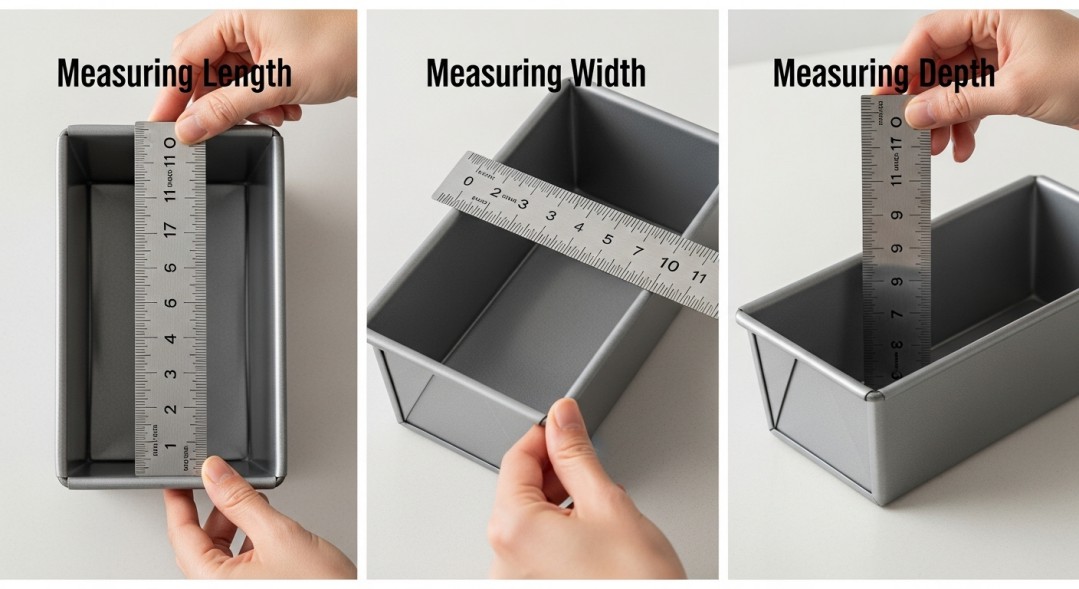
To measure your loaf pan correctly, always measure from inside edge to inside edge, not the outer dimensions. Place a ruler or measuring tape across the top of the pan for the length (the longest dimension), then measure the width (the shorter side), and finally measure straight down from the rim to the bottom for the depth.
I made the mistake early on of measuring the outside of the pan, which gave me numbers that were off by nearly an inch once I accounted for the thickness of the pan walls. Those exterior measurements don't tell you anything about the actual baking space inside, which is what really matters. Now I keep a flexible measuring tape in my kitchen drawer specifically for checking pans.
One tip I wish someone had told me: measure all your pans and write the dimensions on the bottom with a permanent marker. I did this with all of mine, and now I can grab the right pan without having to measure it every time I bake.
Calculating Capacity: Two Methods That Actually Work
There are two reliable ways to figure out how to measure the capacity of a loaf pan, and I've used both depending on what I had available.
The water test method is the easiest and most accurate. Simply fill your pan with water, one cup at a time, counting as you go until the water reaches the rim. I do this over the sink to avoid spills, and it takes less than two minutes. This tells you the maximum capacity—remember to only fill your pan two-thirds full when baking.
The mathematical approach works too, though it's slightly less precise because pans have sloped sides. You multiply the length times the width times the depth (all in inches), then divide by 14.4 to get cups, or divide by 231 to get gallons first. For a 9x5x3 pan, that's 9 × 5 × 3 = 135, divided by 14.4 = about 9.4 cups. When I've tested this against the water method, it's usually pretty close but can be off by a cup or so depending on how much the sides slope.
I prefer the water test because it's foolproof and accounts for any quirks in your specific pan's design.
What Are the Dimensions of a Loaf Pan? Complete Size Chart
Standard Sizes Beyond 9x5
While 9x5 is the most common, I've collected several other standard sizes over the years, and each has its place in my kitchen. The 8.5x4.5 inch pan is slightly smaller and holds about 6 cups. I use this one when I'm halving recipes or when I want a slightly more compact loaf. It's perfect for smaller households or when you want multiple loaves but don't want huge portions.
On the other end, the 10x5 inch pan is larger and holds closer to 10-12 cups. I don't reach for this one as often, but it's fantastic for recipes that make a lot of batter or when I'm baking for a crowd. The extra length gives you more slices without making each slice awkwardly tall.
I've also noticed that some regional differences exist. European recipes sometimes call for slightly different dimensions because they use metric measurements, and their "standard" might be closer to 23cm × 13cm, which translates to roughly 9x5 inches but isn't exactly the same.
Mini Loaf Pan Size Guide
Mini loaf pans have become my secret weapon for gift-giving and portion control. The most common mini loaf pan size is about 5.75 inches long by 3 inches wide, though I've seen them range from 5.5 to 6 inches in length. Each mini pan typically holds between 1.5 and 2 cups of batter.
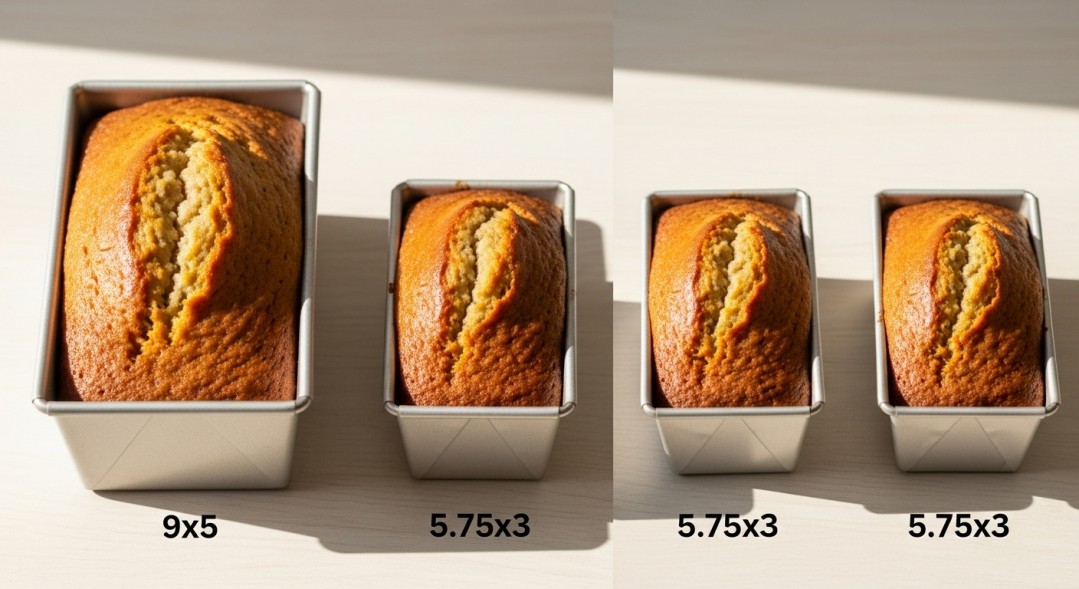
What I love about minis is that they bake faster and give you that perfect single-serving or gift-sized portion. When I make banana bread in mini pans, they're done in about 25-30 minutes instead of the 50-60 minutes a full-sized loaf takes. The edges get delightfully crispy while the center stays moist.
The tricky part with mini pans is converting recipes. As a general rule, one standard 9x5 loaf recipe will fill about four to five mini loaf pans. I've learned to reduce the baking time by about 40-50% and start checking for doneness around the 25-minute mark. A toothpick inserted in the center should come out clean or with just a few moist crumbs.
1 Pound vs 2 Pound Loaf Pans: Understanding Weight Classifications
This is where things used to confuse me completely. When recipes or pans reference "1 pound" or "2 pound" loaf pans, they're talking about the weight of bread dough the pan is designed to hold, not the weight of the pan itself. This terminology comes from the bread machine and yeast bread world.
A 1 pound loaf pan is typically around 8.5x4.5 inches and holds about 6 cups of batter. It's designed for recipes that use about 2 to 2.5 cups of flour and produce approximately one pound of dough. I use this size when I'm making smaller batches or when I want a more compact, taller loaf.
A 2 pound loaf pan is the standard 9x5 inch size (or sometimes 10x5 inches) and holds 8-10 cups. It's meant for recipes using 3 to 4 cups of flour. This is what most American recipes assume you're using when they say "standard loaf pan."
Here's what threw me off initially: the European system sometimes uses different weight classifications, and their pans can have slightly different dimensions even though they're labeled similarly. When I was following a British bread recipe that called for a "2lb tin," I found it was actually a bit narrower and taller than my American 9x5 pan.
Quick Reference: How Big is a Loaf Pan? Size Comparison
Let me break down the most common sizes I use and recommend, based on years of trial and error:
Mini loaf pans measure roughly 5.75x3x2 inches and hold about 2 cups. These bake in 25-35 minutes and are perfect for gifts or single servings.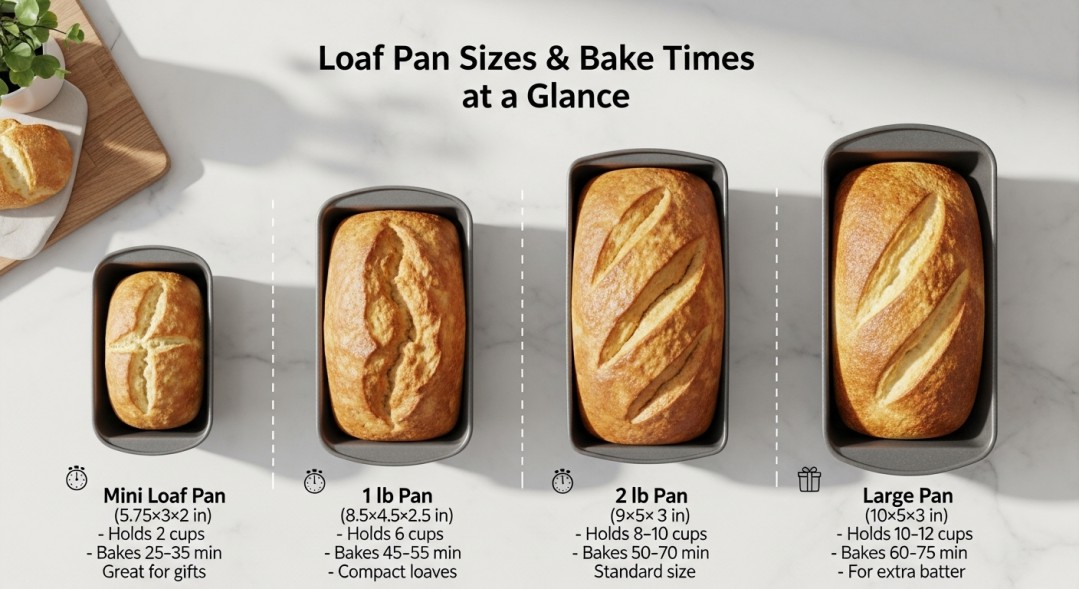
1 pound pans (8.5x4.5x2.5 inches) hold about 6 cups. I use these for smaller recipes or when I want a more compact loaf shape. Baking time is usually 45-55 minutes.
Standard 2 pound pans (9x5x3 inches) hold 8-10 cups and are what most recipes expect. These typically bake for 50-70 minutes depending on the recipe.
Large pans (10x5x3 inches) hold 10-12 cups and are great for recipes that make extra batter. They usually need 60-75 minutes in the oven.
I keep at least two of the standard 9x5 pans, a set of mini pans, and one 8.5x4.5 pan in my collection. This covers about 95% of the recipes I want to make.
Choosing the Right Size for Your Recipe
The relationship between pan size and recipe success is something I learned through plenty of baking mishaps. When a recipe specifies a pan size, it's not just a suggestion—it's carefully calculated for the amount of batter and the baking time.
If you use a pan that's too small, your batter will overflow or take much longer to bake through the center, leaving you with burnt edges and a raw middle. I've ruined more than one batch of zucchini bread this way. On the flip side, if your pan is too large, your batter will spread thin, bake too quickly, and turn out dry and flat. Neither outcome is what you want.
When I need to substitute a different pan size, I follow this guideline: try to match the volume as closely as possible. If my recipe calls for a 9x5 pan (8 cups) and I only have an 8x4 pan (6 cups), I know I need to either reduce the recipe by about 25% or make a small additional batch with the leftover batter. I've started using muffin tins for excess batter, which works beautifully.
Baking times need adjustment too. Smaller pans or shallower pans will bake faster—I usually start checking 10-15 minutes earlier than the recipe states. Larger or deeper pans need more time, sometimes 10-20 minutes additional. I rely on the toothpick test rather than just the timer because every oven and every pan combination is slightly different.
Material and Design Considerations
Over the years, I've baked with loaf pans made from just about every material imaginable, and I've learned that the material absolutely affects how the pan performs—and sometimes even changes what are the measurements of a loaf pan you need to consider.
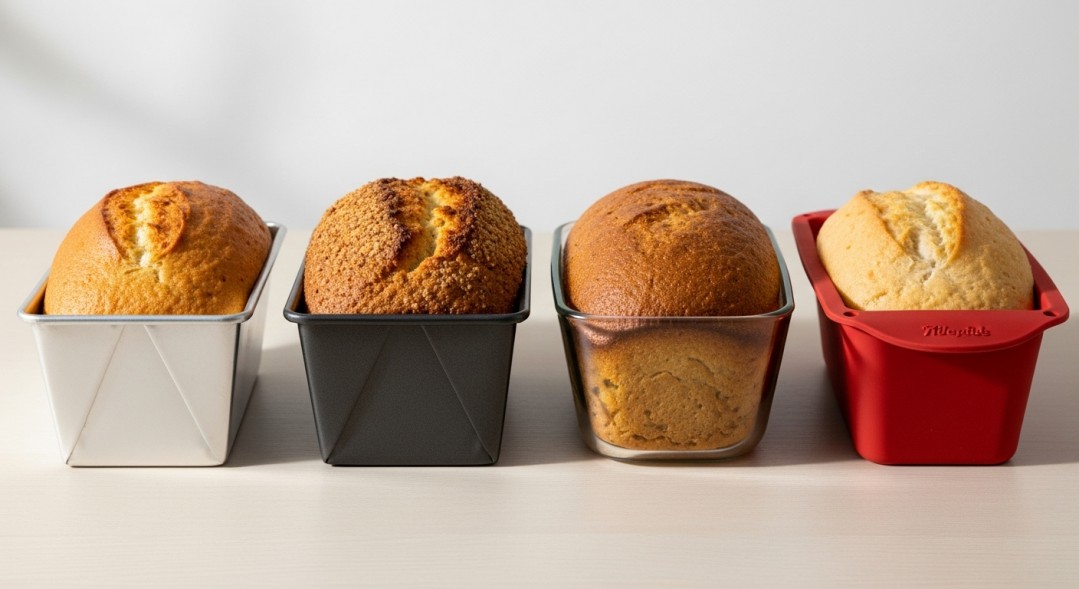
Metal pans, especially aluminum and aluminized steel, are my workhorses. They conduct heat efficiently and give you nice, golden-brown crusts. However, I've noticed that dark-colored metal pans bake faster and darker than light-colored ones. When I use my dark nonstick pan, I usually reduce the oven temperature by 25°F to prevent over-browning.
Glass loaf pans heat up more slowly but retain heat longer, which means your bread continues cooking a bit even after you remove it from the oven. I use glass when I want to monitor the bottom and sides for browning, since I can see through the pan. The measurements are typically the same as metal pans, but I always reduce my oven temperature by 25°F for glass.
Silicone pans are lightweight and nothing sticks to them, but they're floppy and don't conduct heat as well. I've found that silicone pans often need a few extra minutes of baking time, and they don't produce the same crispy exterior. I place my silicone pan on a baking sheet for stability before filling it with batter—learned that lesson after almost spilling batter all over my kitchen floor.
Insulated pans have double walls with air between them, which prevents over-browning but also means longer baking times. These can be fantastic for delicate cakes, but they're not my first choice for breads where I want a good crust.
Wrapping Up: Finding Your Perfect Loaf Pan
So, how large is a loaf pan? The answer really does depend on what you're baking and what results you want. But now you have the knowledge to make informed choices instead of just grabbing whatever pan looks about right.
If you're just starting to build your baking collection, I'd recommend investing in two good-quality 9x5x3 inch metal pans. This standard size will cover the vast majority of recipes you'll encounter. From there, add a set of mini pans if you like making gifts or individual portions, and maybe one 8.5x4.5 inch pan for smaller batches.
Take a few minutes to measure the pans you already own. Write those measurements on the bottom or keep a list in your recipe binder. Understanding the actual dimensions and capacity of your pans will save you from so many baking frustrations.
The biggest lesson I've learned through all my loaf-baking adventures is this: the pan really does matter. It's not just about having a vessel to hold your batter—it's about having the right vessel that helps your recipe reach its full potential. Once you match the right pan to your recipe, your loaves will rise beautifully, bake evenly, and turn out just the way they're supposed to. No more overflow disasters, no more sunken middles, and no more wondering why your bread doesn't look like the picture.
Now get out there and bake something delicious. And if you're trying a new recipe, take a moment to check your pan dimensions first. Your future self will thank you.
Frequently Asked Questions
What size is a loaf pan if the recipe doesn't specify?
When a recipe just says "loaf pan" without specifying dimensions, it's almost always referring to the standard 9x5 inch size. This is what I assume unless the recipe is clearly for a small or large batch. If you're uncertain, look at the total volume of batter the recipe makes—if it's around 5-6 cups of batter, a standard 9x5 pan should work perfectly.
Can I substitute one size for another?
You can, but you'll need to make adjustments. I do this all the time when I don't have the exact pan a recipe calls for. The key is matching the volume—if you're moving to a smaller pan, reduce the recipe or bake in multiple pans. If you're using a larger pan, be prepared for a flatter loaf and reduced baking time. Always keep an eye on it and use the toothpick test to check for doneness.
How do I convert recipes between pan sizes?
I use a simple ratio based on volume. If my recipe is designed for an 8-cup pan and I want to use a 6-cup pan instead, I multiply all ingredients by 0.75 (since 6÷8=0.75). Going the other direction—from a 6-cup pan recipe to an 8-cup pan—I multiply everything by 1.33. It's not complicated math, and it works reliably. Just remember to adjust your baking time and start checking earlier than the original recipe suggests.
Leave a Reply